If you didn’t know, and I didn’t, the White Rose, or the Die Weiße Rose, were a German resistance movement against the Nazis during the second world war. Their activities are largely unmentioned in popular history which is a great shame as their story is one that fills me with ire and pity. There are even a number of European films that tell their story which are well worth a watch when you’re feeling at peace with the world. [For more on the White Rose see – https://en.wikipedia.org/wiki/White_Rose or see the film – https://en.wikipedia.org/wiki/Sophie_Scholl_–_The_Final_Days].
Die Weiße Rose is also an album by old music project entrants Le Joyaux de la Princesse. You might remember them for their Croix de Boisand their collaboration with Blood Axis. This is by far their most poignant album to appear in the music project yet. Perhaps it is because I know the history of Die Weiße Rose and how the music makes a fitting artistic aural narrative to their story, or perhaps it’s because the true terror of a fascist nationalist government still remains in my lefty socialist mind.
I suggest a listen to this album in a book lined study with a strong drink and a packet of German cigarettes.
Destroyer is a bootleg recording of the band’s gig in Ohio 1977.
As I’m not a fan of the band and the only explanation for why it’s in my collection that I can think of is that it was “given” to me by someone who thought that I “should” like Led Zeppelin (I actually like a couple of their songs but find them a little too mainstream for my tastes), all I can say about it is “Yes. It’s in the collection. For now.”
Good old Jim will probably frown at this but I find Kiss’ Destroyer a little kitsch for my tastes.
I’ve known about Kiss since I was young enough to fall over a concrete post underneath the school hall upon which the words “Kiss” and “Rush” were written in permanent marker. People who say graffiti doesn’t affect anyone should pay note to the fact that even at the grand old age of 42 I still clearly remember that concrete post and the graffiti on it. I also remember the Ajax bottle sized crapily drawn cock on the side of the neighbouring concrete post.
Perhaps that comically drawn phallus was a foreshadowing for the lyrics on this album. Yes, I can see the appeal for Kiss and their glam rock sentiments but in a post-1970s world I find it difficult to identify any lasting sentiment for the band other than a squiggle on the side of a post and Jim’s own lasting sentiment for the band.
If ever there was a soundtrack in the late nineties early noughties you could probably bet ten bob on it featuring good old baldy bonce Moby. It was like you couldn’t listen to anything without it having had some Moby influence.
Moby moby moby.
I followed the herd and eventually grew to love his quintessential Play and I suppose I’ll take my hat off to his I Like to Score but by 2004 I’d got bored with him. I suspect the rest of the world did too because his later albums, Hotel, 18and today’s album Destroyed haven’t been played to death by people looking for music for their film/documentary.
Destroyed is a bit bollocks. Much like Jarre, Moby becomes a bit common place and because of this there is nothing new or innovative. Destroyed is Moby pure and simple but it’s a tired Moby. An “I’ve got to release this album because I’m contractually obliged to” Moby. I imagine that the reason he titled the album Destroyed is because it is a reflection on his ability to produce something new.
Still, I’m sure he’ll do what Mike Oldfield did and reappear with something spectacular after a few years of nothingness.
For someone who isn’t a fan of French electro musician Jean Michel Jarre, I seem to have a fair few of his albums.
This is the album of the performance that my brother told me that I should watch when it was on the telly because ancient law stated that I must like Jarre. It was the same brother that insisted that it was a once in a lifetime futuristic event because Jarre would be playing laser harps and in the future we would all be playing laser harps. Playing laser harps and going to the moon on holiday with our jet packs.
Nearly 27 years later we’re still waiting for laser harps, jet packs and holidays on the moon. Instead I settle for driving to Wales on my holiday in my Golf with my musical instrument of choice the human body (mine). Jarre on the other hand is pretty much the same.
See I like Portishead. I am particularly fond of their first album Dummy and their third album Third but the second album proved illusive to me until relatively recently.
The reason for this was because, following release, I was told “It’s shit” and “It’s not as good as the first one” by music loving friends of mine whose musical knowledge I once respected.
Of course many years passed following the release of Dummy and trips to HMV waned due to the availability of music through the likes of Amazon and file sharing. Indeed, many years would also pass until the release of Third but that’s a different story.
So when it came about that the internet was the gateway to all the music ever I set about to find the second album. Of course Wikipedia was in its infancy, the web was a bit shit and I had difficulty actually finding the second album. Probably because lots of people also had friends who told them that Portishead’s second album was shit.
To find the album I did what anyone else would do; search on newsgroups for the keyword “Portishead”. It was during this first search I found a wealth of different versions of Dummy as well as compilations featuring the band. I also came across this album, Desolation Row.
Desolation Row is a bootleggy fan compilation of live-ish performances of the band including Later with Jools Holland, Glastonbury (recorded off the radio by the sound of it), some French gig and a studio rehearsal. Mysterons appears twice and so does Sour Times and it’s kind of a low budget version of Dummy with a few extra tracks. Not a good place to start to get into the band really. My suggestion is to stick with Dummy and listen to it on the worst media playing system you have instead.
We’ve met Sheffield violinist Matt Howden in his alternate guise of Sieben on the Music Project before. This was the first album I bought by Sieben having previously only heard the artist on the Looking for Europe neofolk compendium.
On this album Howden shows how his cheeky humorous side can be laced through his biting observational reflections on various aspects of life. From how the far right have propagated their disgusting agenda through some neofolk to the story of a besotted lonely projectionist, Howden uses this album to set the foundations for his later albums.
If you are new to the neofolk scene, especially the small presence within the genre of British artists, the talented Sieben/Matt Howden’s album Desire Rites is a nice intro.
This is a bootleg from a concert in the series I saw Yes at in 2002. I then saw the band one last time a year later I think.
I grew up with Yes. They have a special place in my heart and mind as well as a place in my music collection. Sadly long time member and bassist, Chris Squire, passed away earlier this month so it is unlikely I will get to see the band again. I have read that Squire’s old pal Billy Sherwood of Squire/Sherwood collaboration The Unknown has stepped up to cover the massive Chris Squire hole in the band. Moreover, lead singer Jon Anderson is also no longer with the band, Rick Wakeman pops in and out, Steve Howe must be pushing 934 and Alan White is looking a bit tired these days too. It remains hard to imagine how long the band will continue without Chris in the engine room.
I’m not entirely sure who this is by. All I know is that it was given to me by my friend Min back in the 90s. The story behind it is that Big Ade (an associate of Min) and his friend (name possibly Simon) got together in Big Ade’s house and created a musical masterpiece using CueBass on Big Ade’s Atari. The added sting was that Big Ade couldn’t read a note of music.
Sadly I am unable to present the entire album for everyone to hear here, instead I created a music video to accompany this entry. It is also noteworthy that I created an album cover for my own purposes and that I have ripped the album from a cassette so sound quality isn’t great.
One of the good things about having musical friends and having a healthy interest in music as a whole means that the likelihood of meeting quality musicians who are members of a quality band is high. One such band is First Time Down.
Having had at least 3 incarnations that I can remember including A Million Pieces, Dirtbox and Eugene Martone, First Time Down are comprised of Steve Cobain and Jim Ellis. The curious thing was I had some music by Dirtbox in my library long before actually meeting Steve and Jim in real life.
These two demo recordings, recorded a few years apart, help demonstrate how well the band work and have evolved. Songs such as Big Star and Falling Fast appear on both CDs and are excellent examples of this evolution showcasing Steve’s distinctive voice and Jim’s refined guitar playing. Like a definitive aural time capsule.
I’m not entirely sure if they still perform as a band but I am aware they do still perform as a duo. Indeed, by curious coincidence, Jim is getting married later this week and I’m sure the two will be performing together then as well.
One of the many things I like to do, musically, is collect demo recordings of bands. I’m particularly keen when it’s someone I know in the band. This week there are several examples of this magpious behaviour.
As it happened, in about 2007, my then wife met members of a then unknown band called Reverend and the Makers. We would regularly get copies of their music as they prepared to launch themselves into the big time. Today’s album is the bands first demo recording.
I never really liked the band, as you can see from their previous appearance on the Music Project.
Every so often during this music project I reach a point where I think “OMG, the next X albums are so utterly bobbins I don’t know what I’m going to write about them!”. I nearly feel like giving up but giving up is not allowed.
Therion took the operatic singer/Metal band fusion that one step too far by having an entire choir. Think Iron Maiden meets Enigma or something. Yeah it doesn’t bode well does it? Well this is the album from which my favorite Therion song comes from and the only reason that it will survive the PURGE. The rest of it really is shockingly bad.
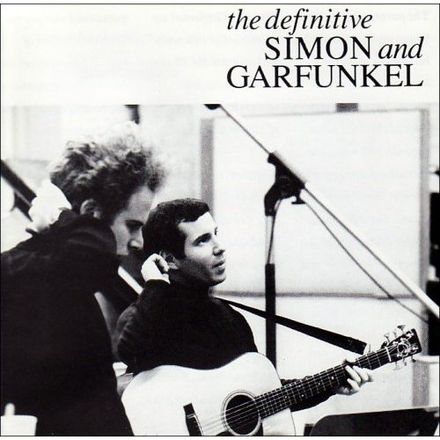
Regardless of what my wife thinks of Paul Simon and the hirsute Art Garfunkel, I’ve never really gotten on well with the pair. I was forced up with Mrs Robinson as part of my life soundtrack in the 1970s, and, since establishing firm musical boundaries between myself and my parents, I have distanced myself from the artists known as Simon & Garfunkel. Sneering contemptuously whenever their musical prowess or influence is mentioned.
So why, you may ask, is this album in your collection? Well it’s there purely because, as highlighted on numerous occasions during this project, my collection is an amalgamation of my own musical tastes, music forced upon me by peers and music harvested from various relationships over the years.
What makes this the Definitive then? Well to me Definitive means exactly what it says, this album should therefore definethe artists, Simon and Garfunkel. Like if you were to look up the band in a musical dictionary this is what you would hear.
So don your cheesecloth, your kaftan and your gingham. Get yourself into a car from the 1960s. Grow your hair like a hippy, wear flowers, tattoo yourself with Dharma initiative symbols and run off to join some San Fransisco based Manson-esque cult with this album on your in car 8-track.
Having had this in my collection since Jamie gave it me nearly fifteen years ago, I finally got round to listening to it for the first time.
I wish I hadn’t.
Jon Lord thought it was a good idea to get Richie Blackmore et al to perform along side an orchestra. These days this happens nearly every day, Magnification by Yes, Pink Floyd’s The Wall and most stuff by Rick Wakeman. Back then it was new and innovative.
In short, this is probably one of the reasons why I ran this project. To weed out the shite from my collection. This album is an example of that shite that is now weeded.
More tribal influenced music from the anthropological answer to Enigma, Deep Forest.
Perfect seduction music if you’ve got a green living room, giant potted cheese plants and a fetish for prancing about your living room in loin cloths while reliving Ibizan hauntology.
Recently, although British Sea Power have not until now appeared on the music project, I’ve developed a taste for their music. Some time recently, possibly 2012, there was a thing on the BBC called Storyville: From the Land to the Sea which, to keep short, was a montage of old seaside footage from the BFI put to music by British Sea Power.
I loved it.
So I went off and downloaded what I could using the crap rural internet I have access to and began to educate myself in the chronology of British Sea Power.
The band have connections to the Lake District and Brighton and their style is kind of a cross between Elbow, Kaiser Chiefs and Blur. They’re quite quirky and definitely British; You can just tell. The album Decline of British Sea Power is their first.
As an introduction to the band Decline is probably not a good place to start. It’s as though they’re still to find their own unique style and are appeasing the mass populace with the selection of tracks here. To quote New-Mrs-Gnomepants when hearing track 2 Apologies to Insect Life: “This is a racket”. However their rusty sea washed iron and rolling sea sound does come out in a number of tracks too.
If I ever get round to making my epic round coastal Britain television-documentary, I’d certainly use British Sea Power to provide the soundtrack.
The problem with being a successful band is that no sooner have you released a “Best of” compilation, you run the risk of releasing other hit records that fans feel cheated out of until your next “Best of” compilation.
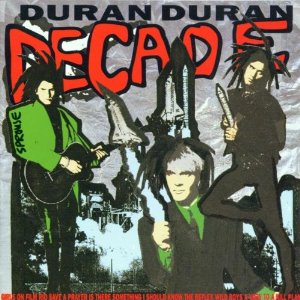
Decade is Duran Duran’s “Best of” compilation from the CD rush of the early nineties and features all their fabulous songs: Girls on Film, Rio, View to a Kill etc. I managed to get this album from a bargain “5 for £30” offer at the Virgin Megastore in Liverpool, which, when you think of the price of music today, was a bit of a bargain. You don’t tend to see iTunes selling selections of albums in “x for £x” offers. Nor do you see Amazon doing the same with their physical and digital sections.
Sometime in the 1990s I must have been living under a rock or something. It seems that, to everyone else, the greatest band that ever performed were around and releasing records. Of course, living under a rock meant that I was unaware of this. Probably in the same way as I was unaware of many other musical things. See, that’s what it was like in the pre-internet nineties; if you wanted to find out about the latest music you either had to know someone who worked at Our Price or read NME.
I didn’t know anyone that worked at Our Price. I knew someone that had a music shop, but they sold instruments and rented videos on the side. I also didn’t read NME. Paul Sanderson read NME. Mike Reagan read NME. Most other people I knew thought NME was something to do with miners or something.
Then the late nineties came and I was more musically astute. There I am listening to Uncut magazines 4AD compilation upon which is a track called Debaser. Only to me they’re singing about a steam basin. Lyrics have never been my strong point. My then pre-first-wife says to me that this song is by the Pixies and that I should like them.
At some other point in that time, there I am in work, whistling absent mindedly along to Debaser while doing a stock take in the stationery cupboard. Along comes my chum Nick. “I didn’t know you liked the Pixies” he says to me from under his beret and soul patched face. “I don’t” I replied. “Well you should like them“.
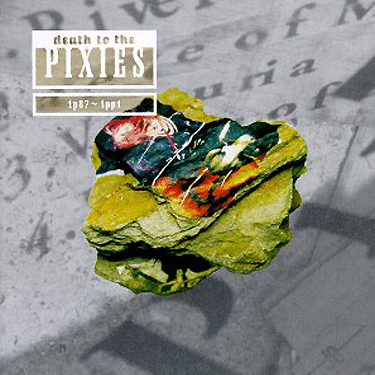
It seemed that if I wanted to be accepted in the world, I had to relinquish my grasp of seventies prog and, at that stage, eighties goth and embrace the modern musical age welcomingly by liking The Pixies. So I went to the Virgin Megastore (HMV was and is shit for music like this) and picked myself a copy of the Pixies’ greatest hits.
And this is said album. I know I should like them. But I don’t. I like two songs on their greatest hits, Debaser and Monkey Gone to Heaven. I should like more of their work. I don’t. I am a failure when it comes to being a hipster it seems.
As you know, if you have been following this blog closely, I have a lot of music. We are only just at entry number 350 and thats after I’ve deleted some albums from my collection that I simply could not be bothered to listen to.
Indeed, there are many albums still to come and there are many that I will hold up my hands to and say “I’ve never listened to this album in my life!”. However, because I believe in quality research when it comes to writing, I do actually listen to those albums before I write an entry.
And so, with approximately three hundred and fifty albums talked about within these megabytes, we come to Deadwing by Porcupine Tree. Now you might remember the last
time we met Porcupine Tree on Stegzy’s Music Project and I talked about how I was introduced to the band’s music by my television productions lecturer and how now I’m middle aged and don’t have time to listen to music like I did in the past. I also talked about how I listened to Coma Divine for the first time and caught myself doing air guitar.
Guess what? Well, recently I obtained Elite:Dangerous and I have been flying around the galaxy with music on in the background, just like I used to do when I was unemployed in the nineties. This enables me to listen to albums in their entirety, just like in the olden days rather than by listening to music on a Saturday morning and hastily cobbling together a few hundred words about the music I’ve just listened to.
Anyway, such circumstances enabled me to listen to Deadwing in its entirety for the first time the other day. Indeed, the experience once again caught me doing air guitar and tapping my foot along to the music. Not bad for only the third Porcupine Tree album I’ve ever listened to.
Deadwing is a concept album about a ghost story. Nobody is entirely certain what the ghost story actually is simply because the band won’t say. In true Prog fashion, lead singer Steven Wilson knocked together a screenplay with his pal and then set about writing the accompanying soundtrack. Of course this was many years ago and the screenplay is still to actually become a corporal entity. But not to worry because you can listen to the excellent music well in advance and make your own screenplay up in your head. With better special effects and a cast of whoever you fancy.
More Finnish Eurorock, this time with the fifth album by Finnish alt-rockers The Rasmus.
I first came across The Rasmus when they appeared on a compilation of Gothic music I acquired from dubious sources. The song that appeared on the compilation was their hit In the Shadows which, several years later seemed to feature on every television programme or film requiring a bit of music to wake the viewer up. But, of course, being a hipster, I heard and liked the song some time before this happened.
Sadly, following the acquisition of this album, it appeared that their song In the Shadows was still the only song I liked. Even when, for the purpose of this music project, I listened to the album in its entirety, I was still unable to find any other song that stirred up those feelings one feels when listening to good music. Moreover, I found In the Shadows a teeny bit passé.
Just goes to show that our love of music truly is organic and constantly evolves. However it still amuses me when I see copies of this album for sale in bargain bins and car boot sales.
A four volume compilation of various works by the band Dead Can Dance.
Being a bit of a DCD nerd, I couldn’t turn my nose up at this. Sure I have most of the tracks already on other albums but there are some tracks on here that aren’t available on conventional releases.
Radio recordings and rare songs appear here along with the foetal essence of some well known DCD songs. It also came with a DVD of the live Toward the Within concert which will appear here on the music project in a few years time.
If you’ve been following this project closely you’ll remember that I embarked on my musical journey via the dark forests of goth back in the drug fuelled 90s.
You might also recall how because of a gothic party held by Fields of Nephilim Cassette giver Chris, I went out and bought Dead Can Dance’s Aion. What you might not know is that this particular album was the cement in my goth music extension.
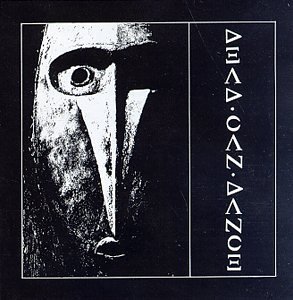
Dead Can Dance is Dead Can Dance’s first studio album. As first albums go, it’s marginally different from the style that they would adopt in later albums but the early shoots of their style can be detected in the last 5 or 6 tracks on the album.
On first listen I remember feeling suitably lacklustre and gloomy yet also quite pleased with my purchase. The pathways to darkness were beginning to open for me and the strange mumbling and incoherent lyrics surely meant something profound or at least mystical.
Then came the internet and with it lyric sites while at the same time, audio technology improved and so did the clarity through speakers as better systems were afforded. The mysticism of the mumbled incoherence disappeared and left wise observations and thought provoking words in its place. It remains a good album, but probably not a good place to start listening to Dead Can Dance unless you’re open to dramatic shifts in style.
During the height of the download free for all, I was taken by the idea that my musical tastes were fairly limited. I was also struck by the idea that the majority of introductions to new music used to come from cassette compilations made by friends or those cassette compilations found discarded on the road, possibly by car thieves.
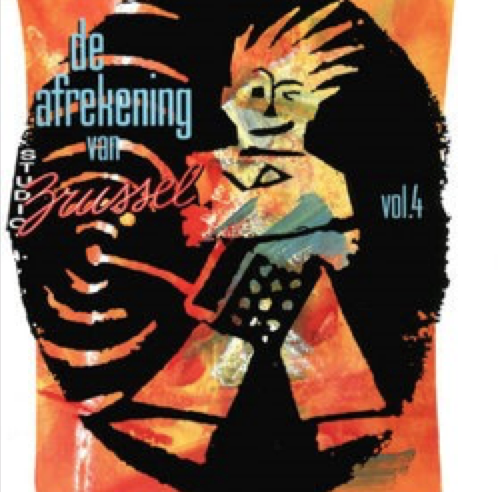
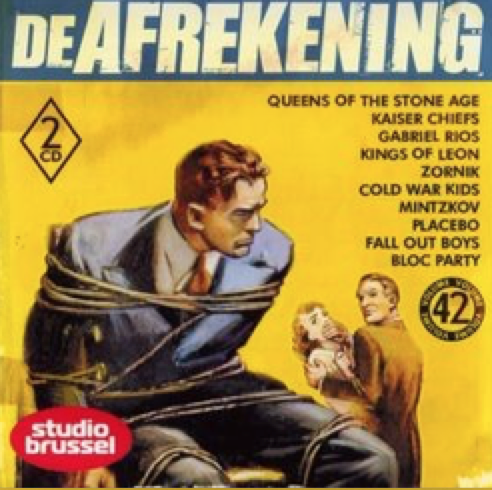
So I took the initiative to download compilations created professionally or by fans. De Afrekening is one such professionally produced compilation founded from a Belgian radio and record chart broadcasting program featured on Studio Brussel. There were many De Afrekening compilations available at the time and I recall downloading many. However, it now appears that I only have the two remaining ones.
Volume 4 contains the following:
Liberty Song – Levellers
Nearly Lost You – Screaming Trees
Rockin’ the Res – John Trudell
Rosie – Claw Boys Claw
In Liverpool – Suzanne Vega
Changes – Sugar
Stockholm – New Fast Automatic Daffodils
Suspicious Minds – Dwight Yoakam
A Letter to Elise – The Cure
Cold by the Sea – Betty Goes Green
Sting Me – The Black Crowes
This Is Not a Song – The Frank & Walters
Dit is mijn huis – De Mens
Goodbye – The Sundays
Soap Bubble Box – Nits
I Had a Dream, Joe – Nick Cave & The Bad Seeds
Generations – Inspiral Carpets
Als de rook om je hoofd is verdwenen – Tröckener Kecks
No songs that really grab me on this selection, lots of indie Madchester rubbish and it’s nice to see Susanne Vega there but I’m not all that enamoured with this compilation.
For Volume 5:
Two Princes – Spin Doctors
You Suck – Consolidated
Creep – Radiohead
Would? – Alice in Chains
Courage – The Tragically Hip
Feed the Tree – Belly
Cats in the Cradle – Ugly Kid Joe
Killing in the Name – Rage Against the Machine
If I Can’t Change Your Mind – Sugar
Why Should We Wait? – Soapstone Mountain
I Feel You – Depeche Mode
Sugar Kane – Sonic Youth
The Ballad of Lea and Paul – K’s Choice
Your Town – Deacon Blue
Somebody to Shove – Soul Asylum
Can’t Call Me Yours – The Scabs
Little Baby Nothing – Manic Street Preachers
Underwhelmed – Sloan
This volume contains a few good tracks, notably including Belly and Depeche Mode. Some other classics including Ugly Kid Joe, which always reminds me of 1993 and Spin Doctors, who feature later in the music project, also feature on the compilation.
While the idea of discovering new music through compilations was good, using the De Afrekening compilations as a method to achieve this was probably not a good idea.
Andy McCluskey and company synth their way through their fourth album which is heavily influenced by German synthers Kraftwerk.
Dazzle Ships features a great deal of experimental ideas and was clearly an influence on many later experimental and avant-garde bands such as Godspeed! You Black Emperorand possibly even British Sea Power.
I listened to this album in its entirety for the first time recently, purely for the purpose of the music project. I was surprised by how, when listened to in one sitting, it is almost conceptual in style. I think it was for this reason alone that the album remains undeleted.
 If you didn’t know, and I didn’t, the White Rose, or the Die Weiße Rose, were a German resistance movement against the Nazis during the second world war. Their activities are largely unmentioned in popular history which is a great shame as their story is one that fills me with ire and pity. There are even a number of European films that tell their story which are well worth a watch when you’re feeling at peace with the world. [For more on the White Rose see – https://en.wikipedia.org/wiki/White_Rose or see the film – https://en.wikipedia.org/wiki/Sophie_Scholl_–_The_Final_Days].


 For someone who isn’t a fan of French electro musician
![Desire rites - Sieben [#363]](https://stegzysmusicproject.com/wp-content/uploads/2015/07/screen-shot-2015-07-27-at-19-14-52.png)

 Angry shouty metal from the noughties.


 Having had this in my collection since Jamie gave it me nearly fifteen years ago, I finally got round to listening to it for the first time.
 More tribal influenced music from the anthropological answer to Enigma, Deep Forest.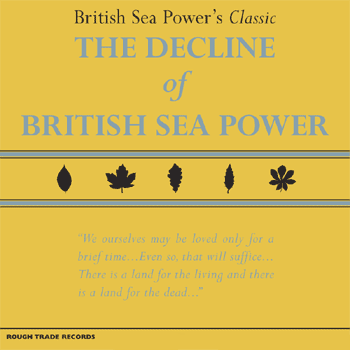
 As you know, if you have been following this blog closely, I have a lot of music. We are only just at entry number 350 and thats after I’ve deleted some albums from my collection that I simply could not be bothered to listen to.
 More Finnish Eurorock, this time with the fifth album by Finnish alt-rockers The Rasmus.
 Andy McCluskey and company synth their way through their fourth album which is heavily influenced by German synthers Kraftwerk.

