Not entirely sure about this album either. Blood Ruby are a band that feature on the Jamendo rights free music site. When looking for music to accompany one of my many films I fidgeted about on the Jamendo website looking for fitting music to use. I suspect I was attracted by the album artwork.
Blood Ruby, according to Last.FM, are made up of Cynthia Conrad (vocals), Margaret Browning (vocals, bass, guitar, keyboards), and Thomas Wall (guitar, bass, keyboards, programming, engineering). They all met online, as it appears most people did until Facebook and the media made everyone insular and untrusting, much like Tryad and other similar bands.
Their style is listed as dream pop or etheral which is a good fit really. Think Cranes meets Portishead. Although this genre has really had its day, there occasionally appears the occasional new artist that makes their mark. Sadly, this appears to be the first of the only two albums available from this artist and even their website makes it appear like they’ve given up and gone their separate ways. You can judge for yourself because, as with all Jamendo bands, their music is available to download here from the Jamendo Website.
I used to like The Byrds. Well, I liked a couple of their songs at least. That was until I discovered that they went a bit Goddy towards the end of the 1960s. After that, it was all bollocks really.
Chestnut Mare appears to be an unofficial fan compilation of some of the more popular Byrds songs. I have no idea how it came to be in my collection other than it possibly came from Jamie. Still, there are a number of hits on it, even though, it appears, the Byrds were just a glorified covers band.
Hello again, it’s me Steelrattus, with my third guest post. Stegzy is obviously far too polite to give me the boot.
Of the three albums I’ve “reviewed” so far this is the most difficult, because there’s not a lot of substance to review. I made the mistake twice previously of choosing “best of” albums, and now we have an (original) film soundtrack!
Why I feel vaguely qualified to comment on this album requires a short bit of background. I have young children, and being someone who loves… adores films I was keen to introduce my eldest daughter to what I feel are some of the best films around. One of those was the 1971 version (Willy Wonka & The Chocolate Factory). I was keen she watched this version first, because I feel it’s the more charming of the two film incarnations of Roald Dahl’s book. We have subsequently watched the 2005 version, which does have some charm, but is arguably spoiled by trying to be too moral. I have tried to read the book to my eldest daughter, but it’s too complicated for her at the moment. Anyway, I have the soundtracks to both films, and we have regularly sung along to them both in the car, so this particular soundtrack is fairly well ingrained in my brain.
Anyway, the soundtrack… for a Tim Burton film you won’t be surprised to find that it’s composed by Danny Elfman. The album is essentially divided into two parts. The first five tracks are all songs with lyrics, and the remaining fifteen tracks are all instrumentals that essentially act as the film’s score. One of the reasons I’d like to read the book again is that apparently the four songs about the various nasty children are taken from Dahl’s book, unlike the 1971 version which has both less and different songs (as far as the children are concerned). Elfman of course had to arrange them to music, and apparently sings them all as well using a variety of synthesised voices to reflect the Oompa-Loompas. The songs are quite fun and as mentioned I regularly sing along to them, with my eldest, in the car. The remaining tracks are a bit more forgettable and fairly standard film score fair.
Here we have the first of the songs about the children, in this case Augustus Gloop. As you can see, all the Oompa-Loompas are performed, with a bit of CGI magic, by Deep Roy. Although as mentioned above, it’s all sung by Danny Elfman.
Changesbowie, released in 1990, is an attempt to cram a twenty-something year career onto one eighteen-track CD. To give you an idea of the challenge, in that time Bowie released seventeen studio solo albums. For some of them he (or his record label) employed competent people to do the cover art; for this one, they apparently got the intern to knock out something on a Friday afternoon.
Let’s assume that, if you live in the Western world and don’t hate music, you’ll be at least passingly familiar with David Bowie. If you’re buying this album then you probably want a little bit of Bowie in your life, but really can’t be faffed with all those seventeen (now up to twenty-five) albums. You want a nice slice of curated pop, showcasing the weird and the genius while skipping all the bits that were just a little too weird.
And to some extent, I’d say this delivers. It starts, of course, with 1969’s Space Oddity, takes in the biggies of the early 70s, skips pretty lightly over the Berlin years, catches up with the pop hedonism of the beginning of the 80s, and then is (wisely) silent on the end of the decade.
Of course, with any compilation like this the question rapidly becomes not “what’s on it?” but “what got left off?” leaving us to wonder exactly who thought that rather turgid Fame was more worthy of inclusion that the excellent Life on Mars or Starman. To be fair, both of those made it onto the slightly-longer LP/cassette versions. Why didn’t they miss off the rather soupy Golden Years in favour of Ziggy Stardust’s overblown Rock and Roll Suicide? But at the point you’re asking those questions, maybe it’s time to move on and buy a couple of albums. This is certainly a decent snapshot, and covers Bowie’s development through musical styles over a couple of decades. It also gives the impression of being a carefully-compiled list (and not, in fact, a rushed-out record-label cash-in brought on by Bowie’s decision to go off and produce completely different music with Tin Machine at the time). If you’re an absolute beginner, it’s not a bad place to start.
The Golden Dawn were a group of enlightened spiritual adventurers devoted to the study and practice of dark arts, occultism and paranormal activities. This basically means they liked to meet in creepy places, have sex (possibly with each other) and take hallucinogenic drugs. Which is what everyone likes to do really.
However, in the time of the Hermetic Order of the Golden Dawn, such things were frowned upon by stuffy types in society. So it’s no wonder why wealthy people dabbled in a bit of old “wakey wakey Satey” in remote places away from prying eyes, what with everyone else being so repressed and stuck up their own arses and everything. Naturally, good old Aleistair “I’m a complete nut case” Crowley, thought it would be a good idea to be a member but he was a little too weird for the other members. So when the Golden Dawn booted him out, Crowley went off to form his own “Let’s all wank in a box” cult and eventually popped his clogs in a guest house in Hastings.
So imagine my delight when scouring Jamendo, a music site where artists provide rights free music (for use in Youtube videos and the like without the worry that Mr Sony will ask you to take down the video), I found a band called Golden Dawn. “Brilliant” I thought, “Some sort of dark satanic goth music to tickle the old occult glands”.
Disappointed isn’t in it. Surprised, yes, disappointed, no. This isn’t Black Mass. It isn’t death growls and tortured souls. It isn’t even worthy of playing backwards in the hope of some vague musical artefacts that you could mistake for Satanic messages. This is nice plinky plonky electro-psychadelia from songwriter/guitarist Nick Gent and lead guitarist Ben Skultety, who, it seems, have about as much satanic wizardry in them as Sooty. It also seems, that they have since changed their name to The Mind Orchestra. Probably because of the hounding from nutters hoping to find darkly satanic occult music to have sex and take drugs in creepy places to.
Changes in Mind, is available from Jamendo in it’s entirety for free. Golden Dawn are a nice fit for those looking for simple sounds to aid them with their moody beard stroking or beret wearing but possibly not for those hoping to raise the Goat of Mendes.
Two bits of good news this time. I don’t have a lot of time to write about this album, and I’m not a great fan of it either. So you, the lucky reader, should have a lot less to read. I shall try and go for a more practical Stegzy type summary approach.
As background, I first heard Jon Anderson during my early 90s university years. Being a nerd I inevitably delved into prog rock, with a lot of musical introductions from my lovely university friend Richard. One of those groups was Yes, and if you didn’t know Jon Anderson is their lead singer. I also listened to a lot of Vangelis, and he has teamed up with Jon Anderson on several albums. I am probably a bigger fan of the Jon & Vangelis albums than I am Yes, although I don’t listen to either a great deal. I did listen to some of Anderson’s solo albums, including the very odd Olias of Sunhillow, but I haven’t gone back to any of it. Anderson’s solo stuff almost feels like Christian rock, although as far as I know he wasn’t into religion a great deal.
Those who’ve not heard Anderson before will be surprised by his voice, which is very high, and quite feminine. Apparently he’s a natural alto tenor, so both speaks and sings in a high range, and it’s not falsetto. This does give his music character and originality, of some form.
Change We Must is again that most accursed of albums, the best of (sort of). It’s doubly accursed because bizarrely these are rearrangements – of a mix of Yes, Jon & Vangelis, and solo tracks – which have an orchestral and choral backing. So they’ve been muzak’d, of a fashion. In all fairness to Mr. Anderson apparently some of the tracks on here are new, so it’s a right old dog’s dinner.
In all honesty I don’t recognise most of the tracks on here. The album opens with one of his most famous tracks, A State of Independence, which is a collaboration with Vangelis. The orchestral version jars though, versus the more spartan electronic sounds of the original. It’s a similar story throughout, to the final namesake of the album, Change We Must, which has both orchestra and choir, albeit the original was also fairly rich in tone.
Sorry Jon, your optimistic spiritual tunes mostly don’t do it for me. Doubly so when new versions of old tracks.
I hope Stegzy doesn’t mind me breaking with tradition slightly. Here’s an actual promo video for the album, featuring an interview with Jon.
Ceromonies: Ad Mortem Ad Vitam – Fields of the Nephilim
Live music from our gothic dust beaten hat wearing chaps from Stevenage.
Perhaps it’s age, but to me it’s hard to take this album seriously. The guy you can hear growling away, Carl McCoy, was in his mid forties when this album was recorded. Which is cool. If that’s what you can pass off. But all I can think of is some “dad” like figure dressing up like some forsaken cowboy growling. Not singing. Growling.
That’s not to say I don’t like it. It’s a good album. Nice mix of songs old and new showing progression and a nice introduction to the band for young newbies. But remember kids, the lead singer is old enough to be your dad. Or, in some cases, your granddad.
More big boobed long haired gothic operatics from Finland’s second greatest export. Century Child is Nightwish’s fourth studio album. It shows.
At this stage, the music sounds unnatural compared to the previous three albums. Synthetic. Forced. Like rhubarb. Bless the Child and the cover of Phantom Of the Opera (but only for pure amusement) are the only two tracks on this album that are akin to previous works. The rest sounds strained. Awkward. Unnecessary. The sound is tired, the singing like a cheated jigsaw.
The follow up album to this, Once, mirrors this strain and really is a last hurrah. Century Child is probably one just for hard core fans. Unlike me.
A musical “accompaniment” for the best selling book by James Redfern which sparked off a new age revolution in the 90s. Plenty of floaty tofu weaving vaginary in this album as well as new age world m-yewsick wankery. And pan pipes. Lots of pan pipes.
Kristin Hersh is another artist I would probably have never got into had it not been for the Uncut: 4AD cover disk I got in the nineties.
Hersh, stepsister of Tanya Donelly (4AD and This Mortal Coil) and former lead singer of Throwing Muses (also 4AD), has a very unique sound. Her early stuff takes a bit of getting used to but this album, Learn to Sing Like a Star and Crooked show a much more mature and well developed Hersh than her earlier primary release groundbreaking Hips and Makers album.
This is a live album recorded sometime in 2010. As with most live albums, this is an excellent showcase of Hersh’s works spanning some years. I have tried to get to see her in the past, but she never seems to come to Daventry 😦
Possibly one of the most remarkable yet uncelebrated albums I have ever had the pleasure of listening to is Cataclysm by David Galas. I have to say that in my personal all time top ten favourite albums, this ranks in the top 5.
Galas, previously with Lycia, released a number of albums between 2007 and 2011 and Cataclysm was the first of his solo releases. I came across the album in 2008 and it changed my life.
Primarily my interest was due to an incorrect review on a website which described the album as “a miserable concept album about Chernobyl”. This was, of course, total bollocks but it didn’t stop me listening to the atmospheric sounds, gloomy lyrics and melancholy melodies while mentally visualising images from an illustrative Chernobyl based film which could pass as it’s music video. Of course, there is no such actual video and it certainly isn’t anything to do with Chernobyl, but a visual backdrop like that would make a fantastic accompanying video to the album.
Galas has a very unique style. His work is instantly recognisable and his musical talent makes most of his contemporaries look like amateurs. Sadly Galas has moved away from his solo career and back into group work. This is mainly due to his own personal reasons but I can’t help feeling disappointed that he was only able to squeeze out three albums.
If you didn’t already know, Castlefest is a mediaeval fantasy festival held annually in the Netherlands. I’ve wanted to go for years. We don’t have stuff like Castlefest in the UK., though I suppose the closest thing to Castlefest in the UK is Fellfoot Woods which I’d also like to go to one day. However, I’m now getting old and festivals equate to the darkest recesses of horror. It’s also in the Netherlands and that’s miles away. So it’s very unlikely that it will become a reality.
A number of artists appearing in this music project have also appeared at Castlefest; Sieben, Faun, Omnia to name but a few. This album is a selection of songs from the line up at the 2011 Castlefest including:
No. This isn’t some long forgotten album or boot leg. This is a special compilation made for me by Chris Herbert in the 1990s after I expressed an interest in goth music. Chris was happy to oblige and provided me with a cassette, which I still have, with some Nephilim songs on.
At first, I thought it was a bit too dark, but over the years it grew on me. To such an extent that it’s possibly one of my most favourite compilations and one of my most cherished cassette tapes. Even though, now, I still have most of the songs on it in much better and clearer format.
It’s possibly the nice line up of FoN’s Celebrate, Love Under Will and Last Exit for the Lost that has had the most effect. I still remember sitting in parks on cold wet days in February, sulking and listening to this on my crumby Walkman while waiting for youthful opportunity to knock. It also used to accompany me on my long daily commute from my flat on Patterdale Road to Bootle New Strand. Much respect to Chris. Cheers mate, you’ve truly made your mark on my life with this compilation.
Let me get this perfectly clear. Playing records at people does not make you a musician. It makes you someone who knows how to use a record player. It involves very little musical talent and, unless you can score the music, it’s not music. It’s someone else’s music.
Hi, I’m Elizabeth, and another of Stegzy’s guest posters. If you arrived here via Stegzy’s Livejournal (LJ still exists, who knew?) then you might know me as Venta.
Casanova was released in the mid-90s, and everyone who’d fallen in love with the Divine Comedy via their previous album Promenade groaned gently. Gone was the high-concept songwriting, the delicate, classical-sounding instrumentation and the references to French New Wave cinema. Instead the band veered towards Britpop, themed the album around sex, and hit the charts running with lead single Something for the Weekend.
Needless to say, Casanova was massively more commercially successful than Promenade.
I, however, was not in the groaning gently camp. I’d never heard of this band The Divine Comedy, but based on chart performance I dismissed them as some form of novelty act. With the arch lyrics, overblown coy voice-overs (“Oooh, go on, you know you want to…”) and trite references, I figured they’d not last long. All right for a couple of songs, of course, but not a band you’d really want to let into your album collection.
A year or two later, someone made me a tape compilation. On it they put Songs of Love, another track from Casanova which by then was known to everyone but me as “the theme from Father Ted”. I fell in love with it, and was immensely surprised not only to find it by the same band, but on the same album. I cautiously investigated.
And there are songs on the album that are worth listening to. Songs of Love, The Dogs and the Horses, The Frog Princess… even the others are fun now and again, even down to the mock radio 4 outro. I branched out, and found that The Divine Comedy (or, as it should be more accurately known, Neil Hannon plus whoever he’s roped in this time) are really rather clever. They fell into a bit of a Britpop hole for a while, and still occasionally over-reach themselves in terms of pomposity, but their music is always worth listening to.
Casanova isn’t their best album, but even their flirtation with the commercial zeitgeist still allows the talent to shine through at times.
Hello, I’m a guest post! That is, the lovely Stegzy made a request for people to assist with some music reviews and I offered.
One of the albums on offer for review was by The Beautiful South, so I saw it as a chance to make up for Stegzy’s previous damming The Beautiful South review, he said tongue-in-cheek-ily. But I have offered to review a total of three albums, so you’ve got more from me to look forward to. Sorry.
Do I feel qualified to review music? Well, I have listened to it. I’m not quite sure what form a music review should take. Should it be one of those flowery artistic type reviews that consists of a number of mellifluous words but leaves you with no actual clue of whether you will enjoy it, or a highly mechanical review that expounds on the quality of the key changes around the thirty-eighth bar. Sadly I’m not qualified to do either of those, but <Somerset accent>I know what I like!</Somerset accent>
My first review is of The Beautiful South’s Carry On Up the Charts. Sadly it’s a <shudder>… best of album, and as we all know they’re as bad as those flashback Star Trek episodes where you feel cheated of a decent plot. But on the other hand it does contain a lot of lovely tracks, and acts as a lazy introduction to the group. Released in 1994, the same year as tBS’s fourth album, it contains tracks dating back to their very first album, spanning six years.
For those that don’t know, tBS were formed from some of the members of previous popular beat combo The Housemartins. I still can’t get over that Fatboy Slim was in The Housemartins, but there you go. The Housemartins were an unusual sounding almost acapella group, but broke up after just two albums in 1988. The following year tBS released their first album. I’m always fascinated by the history to a band’s name, but with tBS they’re essentially a bunch of left-leaning northern folks, hence it was chosen ironically.
I should mention a bit about reviewer skew. I was introduced to tBS when a girlfriend bought their first album, presumably based on some chart success. We both liked it, particularly the darker edge to the non-chart tracks, and she continued to buy their albums as time passed by. My liking for them outlived the relationship, and I bought everything they did until they split in 2007. Of course those with a current interest in music will know that two of the key people from the band, Paul Heaton and Jacqui Abbott, recently joined up again and released What Have We Become? My love for tBS waned though around their sixth album, Quench. Successive albums, and also What Have We Become?, just didn’t and don’t seem to have the bite of earlier albums. Or perhaps I just burned when it comes to their style.
Anyway, Carry On Up the Charts. The album opens with Song for Whoever. This is one of my least favourite on the album, and the one that got stacks of radio play, and hence may have annoyed a lot of people. It also has a definite Housemartins feel to it. It has one of those annoyingly catchy choruses that tends to mean it’ll roar up the charts, although I think it only made it to number two at the time. Despite being one of the more pop-py sounding tracks on the album it does have that tBS cynical edge to it though, as it is about a songwriter reeling off his list of various muses. I suspect most people buying the single probably missed that, and just liked the catchiness. The second track is You Keep It All In, and is a much darker albeit somewhat harder to understand affair. Essentially it appears to be referring to situations where someone wants to stand up to someone, but instead keeps it all in. The situations vary from… well, I’m not entirely sure. Slightly more coherent lyrics would have helped. But it seems to end with a verse about sadomasochism. Possibly. And that’s dark, right? The third track, From Under the Covers, is a more gentle and easier to understand affair seemingly written about a friend who never manages to hold down a job, and has a wealth of excuses, but manages to endear himself to everyone. This has sharper and better flowing lyrics than the first two tracks, in my opinion, and feels more like classic tBS. That is the sound that I grew accustomed to in their darker songs, during the first few albums. This is followed by A Little Time, featuring one of the various female singers that have come and gone from The Beautiful South, in this case Briana Corrigan. One of the curious things about tBS, aside from the changing female vocalist, was that they had two male lead vocalists. There was the aforementioned Paul Heaton, and also Dave Hemingway. Dave and Briana sing in this song, taking turns on each verse. The time being taken refers to the male part of the track, who is singing quite nonchalantly about needing some space and some freedom. The female part is far more frustrated and annoyed with the man’s need for space. Ultimately the song ends with the man having thought about it, and calling off the relationship. I was surprised to read that this was tBS’s only number one track. Curious really because it isn’t enormously catchy, nor is it very jolly, but it is very much classic tBS still.
This is the point in the review where you think, “is he really going to write about every track?”, and I’m thinking, “well, it will seem a bit odd if I just stop here”. The fifth track is My Book. Featuring all three vocalists this appears to be about a failed relationship, or at least a failed person. Hard to say. Again the lyrics are clever, even if it’s hard to derive meaning. This is followed by Let Love Speak Up Itself which is a somewhat clearer song about love being more important than material things. In typical tBS fashion though it ends on a rather sour note, when love dwindles in a relationship. The next track is a much faster paced number, Old Red Eyes is Back. It’s a much simpler and straightforward tale about an alcoholic, again with that classic sour note ending, with Old Red dying. Sorry for any spoilers. The eighth track, We Are Each Other, continues in the same faster paced vein. The lyrics are sharper and subtler, but very clearly about one of those couples that lives in each others pocket, “Closer than a sister to her baby brother. Closer than a cat to the child that she’ll smother.” No sour note ending this time though, just a repeat of the chorus. The next track, Bell Bottomed Tear, has a country and western twang to it and a slower rhythm. It’s also a darker song, mostly headed up by Briana and her gorgeous Irish lilt. Essentially it seems to revolve around a one night stand which didn’t quite work out, hence the tear.
The tenth track, and one of my favourites, is 36D. Unsurprisingly it refer to a bra size, but more so its usage in the media as a defining characteristic for women. The song squarely lays the blame for the objectification of women at the door of women that take their clothes off for money, which apparently led to Briana quitting the band. Moving on to the fourth and final album, at least as far as the compilation is concerned, the next track is Good as Gold. This is, in my opinion, where the quality starts to tail off, both in terms of the best of, and tBS generally. The track is pleasant enough though, but just lacking an edge. It seems to be about reality falling short of aspirations, and I did wonder if there’s a reference to Elvis, “Dried his mouth in the Memphis sun”. The next track is Everybody’s Talkin, which strangely is a cover of the original 1966 track by Fred Neil. This isn’t to say that tBS do a bad job of it, but cover songs seem a strange choice for them. No doubt there’s some ironic element I’m missing, but it was also the most successful track from their fourth album in terms of chart position. The thirteenth track is Prettiest Eyes, a slower and gentler track, and a rather surprisingly sweet love song. No dark edge or cynicism to be found here. The Prettiest Eyes refers to the muse of the songwriter, and despite time passing by the eyes remain pretty, and their relationship remains happy. This is followed by One Last Love Song, which is rather folk-y, and I can envisage being sung drunkenly in Irish pubs. I don’t much like it though. Apparently the German, US, and Japanese versions of the album then feature Dream a Little Dream of Me. Oddly I seem to have it, so I’m not sure if I ended up with the US version. Anyway, it’s a rather dreadful cover of the 1931 song, predominantly sung by Jacqui Abbott. Not that I have anything against Jacqui, she’s lovely, it’s just the choice of song, and another cover song! Oh well, most best of albums end weakly.
And there you have it. Apologies for the epic post. I promise the next two that I do will be shorter, mostly because (a) I don’t know the albums so well and (b) there’s less to write about the tracks.
It’s hard to choose a favourite song from the better songs on the album, but here’s 36D…
Longer term readers will already know, I came to the goth scene quite late. I’d heard about Miranda Sex Garden in rumours and whispers, so when I came across their entire back catalogue I was overjoyed.
“Oh you will like Santana Stegzy mate” said some wise old chump. Problem is they were wrong. Yes, I like a couple of their songs. I like a couple of Beatles songs, but that doesn’t make me a Beatles fan.
Santana, most famous for their song Black Magic Woman, bang out this their fourth studio album. Can’t say I like it really, so into the recycle bin it goes. But it reached number 6 in the UK charts in 1972.
On frequent occasions during this project I come across albums I have no idea how or why I have them. Unfamiliar with Ms Williams as I am, I attempted to listen to the album. Just for you. Yes. this is the kind of stuff I do for webkind.
Capital Gold: Legends (Volume 1) – Various Artists
Seems like there was a time when all that was available was compilations. Compilations compiled by this person, compilations compiled by that person. In this case, the compilation has been compiled by Capital Gold radio. These are legendary songs.
Although I wouldn’t really call any of them “legendary”. They’re pretty much run of the mill and there are many more superior tracks available from the artists that appear on the track listing. Still, it’s ok if you’re having a light soiree at home or entertaining people in their 60s.
Another one for the recycling bin. Available in stig bins everywhere.
I’m always keen to have guest writers on my blogs, Stegzy’s Music Project especially. As many of you will already know, I’m off getting married soon, so I am keen to have someone take care of the postings while I’m away.
If you would like to review any of the albums listed below, please message me (either in comments, email or DM) with the album you’d like to review or comment on and I’ll set you up as a contributor.
I’m happy to make the music available to you too if you haven’t got it already. I find that the project has meant I’m often listening to things I’ve never heard before and it’s fun writing musings about things as you hear them for the first time.
There are a small number of albums that I’d like to do myself (marked with an asterisk) but I’m happy to have guests review them too if they want. As long as you can commit to submit before or on publication date (in brackets) that’s fine. I don’t usually post on weekends but if I get significant interest, then I’ll fudge the dates accordingly.
So, coming up is:
Car Wheels on a gravel road – Lucinda Williams (9/2/15)
Caravanseri – Carlos Santana (10/2/15)
Carnival of Souls – Miranda Sex Garden (11/2/15)
Carry on up the charts – Beautiful South (12/2/15)
Casanova – Divine Comedy (13/2/15)
Casino Classics: The Remix Album – St Etienne (16/2/15)
Cassette – Fields of the Nephilim* (a compilation given to me years ago) (17/2/15)
Castlefest 2011 – Various artists (18/2/15)
The Cataclysm – David Galas* (my favourite album of 2009) (19/2/15)
Cats and Mice – Kirstin Hersh (20/2/15)
Celestine Prophecy – Christoper Franke (23/2/15)
Century Child – Nightwish (24/2/15)
Ceromonies: Ad Mortem – Fields of the nephilim (25/2/15)
Cammell Laird Social Club is possibly one of my most favourite albums. Not only is it a sly dig at Buena Vista Social Club but it’s possibly the finest bit of musical wit and whimsy that has ever existed.
Prog is a funny old thing. Lots of twiddly widdly. Lots of showing off. Long songs. Nice things like that. Punk came along and ruined it; turned music listeners into consumers of sweet saccarine junk with about as much artistic merit as a lump of tar.
What more can one say about Gong? French weirdos play odd music about gnomes, pixies and floaty things of all varieties. Heavily drug influenced. Far out.
 Chicago Demos – Blood Ruby
 Chestnut Mare – The Byrds (#260)
 Charlie and the Chocolate Factory – Danny Elfman
 Changes in Mind – The Golden Dawn
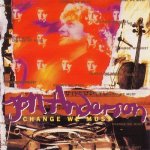 Change We Must – Jon Anderson
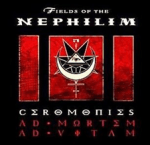 Ceromonies: Ad Mortem Ad Vitam – Fields of the Nephilim
 Century Child – Nightwish
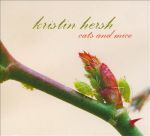 Cats and Mice – Kristin Hersh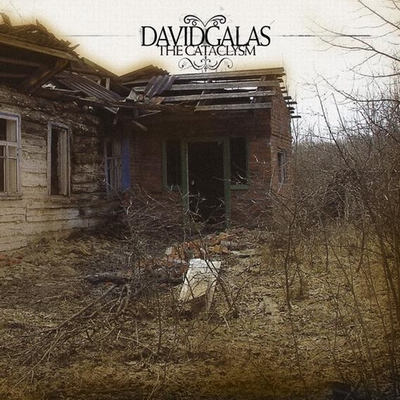
 Cassette – Fields of the Nephilim
  Casino Classics: The Remix Album – St Etienne
 Carry On Up the Charts – The Beautiful South
 Caravanserai – Santana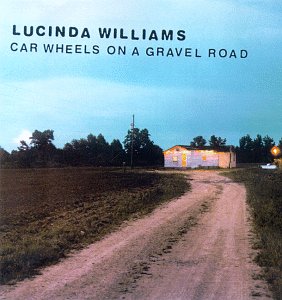
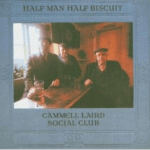 Cammel Laird Social Club –
  Camera Camera – Renaissance

 Stegzy's Music Project