Apple Music was one of the causes of the last hiatus. Having taken advantage of the super 3 months free offer and slightly better than usual broadband at my rural home, I was given access to loads of new music. Moreover, I was thrilled to discover the “Suggested for you” feature of the For You tab and how it “Suggests” music you might like based on your listening. Then, one-day last year, Apple Music suggested I’d like Emerger by Carptree and that was it, I was sucked in like a leaf in a water pump reservoir.
Carptree do everything right that a progressive rock band formed of two Swedish blokes with a fondness for fishing and a theremin would do. Bog standard low budget music videos, lyrics about nature, crazy waxed moustaches, lots of keyboard twiddly and a vocalist that sounds like Peter Gabriel before he went all Brian Pern.
Emerger is new prog done well. Like someone has been handed the progressive rock recipe book and followed it to the letter. The whole album has a semi-concept feel (is it about fishing? Or is it about life on a river bed? I’m not entirely convinced) and the production values show how easy it is for middle-aged mates to be creative together in a “We’re getting old now but haven’t made it yet because of the day job” way with an Apple Mac and a bloke from work who plays the drums.
Amongst the bands appearing in this compilation are Mandrake Paddle Steamer, Simon Dupree & the Big Sound, The Lemon Tree and The Orange Bicycle with some oddly familiar yet new to many songs. I saw this compilation as a gateway to new-to-me and interesting acts from the psychedelic era, about the time when the Beatles were farting about with Sergeant Pepper and lots of drugs and indeed, there are subtle beginnings of some huge prog acts within this album and bands in which young prog stars cut their teeth.
Whenever I hear Glass Hammer, I can’t help imagining a group of prog loving guys getting together to play music they enjoy. They do a few cover versions then decide to do their own stuff. Their own stuff is heavily laden with references to riffs and melodies from the covers they have just played. This makes their sound almost comical and self-referential.
I first heard Glass Hammer on the Odessey concept album, a various artist collaboration retelling the story of Odysseus, in the track In the Court of King Alkinoos and was interested in its similarities to works by Yes and King Crimson. A quick Google resulted in the suggestion that Inconsolable Secret was an album that I’d like.
I didn’t.
There is a little too much twiddly in the album for me. Lots of long keyboard widdling and guitar wankery can be a little too detrimental to the sound of an album. Moreover, the similarities to Yes are a little too obvious. Indeed, Glass Hammer singer Jon Davidson would later go on to replace Jon Anderson in the latest post-Squire incarnation of Yes. Beyond that, there are too many similarities to In the Court of King Alkinoos. Too often I forgot I was listening to Inconsolable Secret and thought iTunes had slipped into Oddessey. Still, it’s an interesting work and I suppose I keep it just incase my music tastes develop later, much like how they did recently with Renaissance and Illusion.
You might know Graham Fellows as Jilted John or in his Northern persona John Shuttleworth. Simplistic easy listening with a heavy dose of Northern British humour. I bought this album after seeing Shuttleworth live in Milton Keynes.
As long term readers of this project might remember, during the divergence of Yes in the early nineties, when Chris Squire said “No” to Jon Anderson’s use of the band name
Yes
forcing the creation of the eponymous Anderson Bruford Wakeman Howe (and later the creation of Anderson Rabin Wakeman (ffs!)), Jon Anderson, Bill Bruford, Rick “Keyboard Wizard” Wakeman and Steve “Carpet” Howe got together with Tony Levin, released an album and went on a world tour entitled An Evening of Yes Music. Incas Valley is the bootleg of one of those shows.
I remember being excited at the prospect of Anderson Bruford Wakeman Howe touring the UK with their show and hoped that I would be granted permission from my parents to go to their gig, the closest to me at the time was in Birmingham. Sadly, my olds decreed that 16 was too young to go to Birmingham to see a rock band on my own and my older brothers couldn’t care less about their younger brother’s musical development so didn’t offer to take me. Instead one recorded onto a cassette a BBC radio broadcast of the gig instead so I had to make do with that.
Many years later I discovered the Incas Valley bootleg on a binary newsgroup and it was pretty much the same set but with extras. So now, to relive that experience, I often play Incas Valley on my stereo in the kitchen while I charge myself £40 to sit in the loft and pretend I’m in the Birmingham Arena. Win!
Incantationsis Oldfield’s fourth album following Ommadawn and precedes Exposed. Musically, this album features themes and motifs that are repeatedly used throughout the four sides accompanied by Oldfield’s stylistically familiar circle of fifths. Through his guitar wankery, his use of choral and a folksy solo by his singer du jour, Steeleye Span’s Maddy Prior (doing a really good impression of Renaissance’s Annie Haslam), the whole album just screams Mike Oldfield.
Incantations requires a good set of headphones, a good red wine and a badly earthed hi-fi for that true middle-class seventies dad experience. It is sadly too minimalist for casual listens and, like most of Oldfield’s work, definitely requires the listener’s full attention to appreciate fully.
The soundtrack for the 1993 film In the Name of the Father about the Guildford pub bombings of 1974.
While the film is an often harrowing study on injustice, political corruption and false convictions, the soundtrack is nothing that special. Bono, Sinead O Connor, Gavin Friday, The Kinks and Thin Lizzy (naturally with their Whisky in the Jar) give the whole set the geographical soundscape for the period piece, Bono and O’ Connor for the Irish connection and The Kinks and Thin Lizzy to set the time.
I think around that time in the nineties there was a strong swell in Irish pop and rock surfing on the crest of which was Bono on his U2 surfboard and it seemed like any TV show or film with a vague Irish link would have featured either a song by U2 or Sinead O’ Connor.
Mrs Gnomepants v1.0 was very fond of the film and requested that I obtain the soundtrack during the Great Internet Free For All of the early to mid noughties.
I first learned about King Crimson following the amusing Bill Bailey fronted Channel 4 docu-countdown-show Top Ten Prog which was broadcast at the height of the prog revival of the late nineties/early noughties.
Crimson King was the band’s first album, King Crimson then comprising of Robert Fripp Michael Giles, Greg Lake, Ian McDonald and Peter Sinfield. Over the years Crimson’s line up would change more often than I change my socks with other notable musicians such as Yes’ Bill Bruford and session musician Tony Levin turning up over the years. As a result of this frequent fluctuation of line up, it is difficult to find a sound that one can pin on their output as 100% identifiable King Crimson. Indeed, their heavy jazz influence makes most of their output inaccessible to me as after a while, for me, it starts to grate.
Even so, the variety of the sound and the diverse use of instruments make In the Court of the Crimson King is an album I enjoy listening to, however, the album is, sadly, not available on Apple Music. Licencing again eh?
Tess Don’t Tell was the first song I ever heard from this, Ivy’s fifth studio album. I forget where it was but suspect that it was on a random “Music you might like” playlist from the earlier days of Last.FM before it was bought by Spotify and ruined. Of course having a band name like Ivy meant having to use hardcore advanced Googlefu so that Ivy, the American band, came up in searches instead of what other monstrosities came up instead.
Ivy’s sound is a familiar one, haunting female vocals over lackadaisical rhythm and melody that just says LAZY SUMMER’S DAY in huge invisible letters. They’ve been sampled in Europe and were quite popular in parts of North America and Canada for a while. Sadly, as with many non-British bands, the licencing laws and promotion of such bands in the UK mean that few people here have heard of them except perhaps in the occasional American TV show or film.
We’ve seen Les Joyaux de la Princesse (LDJP) on the music project several times before, so by this time we should be aware that yes, they have been associated with some far right philosophies and yes, they have looked at a history that some would prefer to be buried, but we should not bury history for how else can we learn the errors we have made in the past. Moreover, art should know no barrier and we should consider that, for all we know, even the Statue of David or the Mona Lisa may have hidden connotations no longer apparent to modern eyes.
However, readers also should remember that while some music in my collection has been associated with some less than savory organisations and times in history, even the likes of Band Aid and what they stand for are seen as obscene in some parts of the world, but that doesn’t mean that the music isn’t any good and, indeed, while I don’t agree with the politics and allusions made by such artists, I appreciate their work.
In Memoriam is LDJP’s second 2004 release and is a work that examines through noise, recordings and industrial ambience the life of Philippe Henroit, a staunch anti-communist and Nazi sympathiser in Vichy France.
Not knowing this when I obtained it, I enjoyed the music for what it is, atmospheric ambience overlain with recordings of a strong and passionate sounding French speech, a language that I have very little comprehension of beyond playing ping pong in La Rochelle. I suppose in my childlike innocence and ignorance, I am attracted to the haunting voices and sustained industrial music rather than the ideology and symbolism that is lost in aural exposition.
Today I’m stepping back in time to add some of the albums I have bought since starting this project back in 2014. While I will continue to work through my album collection alphabetically, occasionally, once a month at least, I will post an album bought recently that I may have missed alphabetically. One such example is todays offering from hauntology experts Belbury Poly.
From an Ancient Star is, in my mind at least, the soundtrack from a British 1970’s children’s TV programme from Ghost Box Studios. A young family, mother deceased, move into a spooky old manor house in rural Berkshire (because it always is); Two older children, brother and sister, their adopted younger sibling and scientist father.
Within the house they discover a “hidden door” which, it transpires, allows passage between a strange new world wherein the children have a most peculiar adventure. Freddie Jones or Patrick Troughton would be the old man living near the house with seemingly bizarre ideas, while rugged Patrick Allen would provide wise sensible fatherly words to his wild sounding children alight with strange tales, perhaps supported by his new girlfriend possibly played by someone like Caroline Munro.
Sadly, there isn’t really such a programme, but, upon listening, hauntological memories of Owl Service, Children of the Stones and Dramarama from the golden age of children’s TV are invoked. Its not hard to imagine the music being used in such programmes, yet the album is actually from 2009.
Belbury Poly have a really unique and imagination driving sound and I think of recent years, this has got to be my most favourite Belbury Poly album. From beginning to end, every time you listen, you get something new.
Or should that be reawakened memories from that parallel universe you slipped in from….
If you lived in South Liverpool during the late 1980s you would have seen posters around the place for local popsters Hey Marsha!. On the back of the emerging Madchester scene, rising youth unemployment, low prospects and the internet not having been invented yet, not to be out done, Liverpool had its own popular music revival scene. Bands like Pyramid Dream, The Stairs, The Farm and Hey Marsha! jostled to be the next Beatles, be discovered and propelled to a life of occasional studio dates, late into the night boozing and drug parties.
Sadly, the horse I backed, Hey Marsha!, split, reformed as The Numbers, split and then went off to become accountants, teachers and office workers at the council, which goes to show I’m never a good judge of good music; John Peel, I’ll never be. Unfortunately, in the days before AOL and Freeserve, the band’s marketing was mostly limited to flyposting, sending advance copies to journalists and use of Probe Studios in Button Street while no doubt leaving their lyrics in the green room and typing out their setlists so that meant they didn’t get the coverage I think they deserved.
In a Living Hell, is a vinyl rip I did a few years back of the band’s EP so you won’t find it in the shops. Sadly, because of this, it’s also not freely available on the internet. Also, when ripping the vinyl I discovered that a cat had been sick all over the record some years previous and I hadn’t noticed as a result the grooves are now clogged and the first track has a massive gap in it.
Instead, here is the only Youtube video I can find of the band’s music from their first release Optimism Flamed. Until writing this entry, I’d never heard the track before, but you can get a great feel for the band’s sound through this track.
Mrs Gnomepants V1.0 is the keeper of this album of which I have a digital rip. Weirdly, and possibly because of you know “internet downloading”, I appear to have a fusion of two versions of this album: the original 1998 CD rip and the 2003 Special Edition.
Of the two versions, it’s the original I prefer, I’m not sure why producers think remixing things is something people want to hear. I mean imagine someone going into the Louvre and remixing the Mona Lisa the making the remix the only version people could see. There would be uproar!
Impossible Princess is a marked divergence from Minogue’s usual pop princess style and, I think at least, is her best work. She has said of the album that she would never do another like it and it is her least favourite. Also, sadly, exposure wise, it didn’t fair as well as other albums, especially in the UK, as its release coincided with the death of Princess Diana, so was renamed Kylie Minogue and release was delayed until the buzz had died down.
This and Air’s Moon Safari are two albums that define a period where there were a lot of changes in my life every time I hear songs from it, fond memories are invoked of people I’ve not seen in ages and events and activities partook. It still, even nearly 20 years since its release and about ten years since I last listened to it, sounds amazing.
When she’s not wailing away hauntingly with Brendan Perry and the rest of Dead Can Dance, Lisa Gerrard likes to loan her distinctive siren call to other atmospheric music makers like Irish composer Patrick Cassidy (Hannibal {2001} and Salem’s Lot {2004}).
This pretty much sounds no different to any other Lisa Gerrard work and will no doubt appear in cheaply produced tense, moody-broody television dramas and films set in rainy locations and involving despairing situations such as wearing raincoats in Washington DC or the protagonist not being able to tell people about something awful they’ve uncovered because “the man” won’t stand for it.
I think if I really want to feel depressed and out of luck, this is the album I’ll listen to.
Not one of those CDs that you might find in an incense smelling floaty vagina new age shop in Avebury or Glastonbury but not far off.
Immaculata is the second album of Duncan Patterson’s music project Ion and, if the official Ion website press blurb is to be believed, a result of visiting Greece and Ireland to study musical style. And why wouldn’t you believe that? You can clearly hear the Greecian influences, the Irish influences and also maybe a teeny bit of influence from Lisa Gerrard or Blackmore’s Night.
There are some good sounds on this album and I’m not entirely certain how it ended up in my collection, but I suspect I’ve probably got it from either a royalty-free site like Jamendo while looking for something to use in a video I was making or it was one of the last things I downloaded from Usenet.
This is the Sugarplum Fairies’ fifth album following Chinese Leftovers and preceding Godspeed & Silver Linings and was the first crowdsourced/funded album I ever contributed to. It features the usual corduroy wearing English Literature teacher allusions and lyrical references as well as the haunting tones of Sylvia Ryder’s vocals.
Every time I listen to SPF I imagine the life of a female English Literature student besotted with and embroiled in a steamy Truffautesque relationship with their older corduroy jacket with leather patches wearing teacher. Lying post-coitally semi-naked on a bed in a smoke-filled wooden panelled windowed room. Copies of classic literature strewn hither and thither. Perhaps, as the album title suggests, that’s the imagery the band want us to get…
Having now swapped to the more hard drive friendly Apple Music, when writing entries for the music project, I often try to do research by listening via my iPhone through my car stereo while driving to and from work. This usually works well for the more mainstream bands in the collection but sometimes I’ll have difficulty locating the album on Apple Music because of “Licencing Laws” which I feel is a bit of a bugger because I have the CD!
Images is a “best of” compilation of Jarre’s work. It is the last CD I ever bought from the Virgin Megastore in Liverpool (now the awesome Clas Ohlson) during a 5 for £20 mega sale. Isn’t it a shame that streaming media providers like Apple Music and Amazon don’t do the good old “5 for £20” deals? Instead, they sting you for music you already own. Meh.
Jarre is one of those artists whose music screams 1970s hauntology. In fact, I’d probably hazard a guess at him being an influence on the likes of Belbury Poly, Focus Group and other Ghost Box stalwarts. To me, if it isn’t the expectation of hearing the hum from my father’s stereo’s badly earthed amplifier or the memory of the cassette tape with the picture of the weird skull/bleeding Earth picture on the front, the 1970s is this type of music. The tracks on this album are pretty similar to those on Essential and Aero, indeed, this is just simply a record label’s attempt to cash in on some hapless music nut wanting a bargain in a 5 for £20 deal.
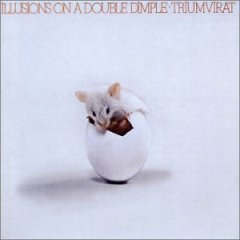
This, it has to be said, is quite possibly the album that has been the most influential in my life. From as young as 11 years old, when introduced to the album by my brother who had won it in a competition, to my teen years where Shitbag Pulling and I would sit around his piano and try to deconstruct its intricacies and beyond into my late twenties, thirties and present day. Not a period of my life has gone by without something being connected or linked to this album.
Back in the pre-internet days, one’s only source of music would be friends, relatives and flicking through the alphabetical racks in Virgin Megastore, Our Price or HMV. Every single time I went to those shops I would flick through the racks, Triumph…Trivium…no Triumvirat. Every dictionary of popular music I would thumb through to T looking for anything, even a chuffing footnote about Triumvirat. No. Nothing. By my early twenties, when I was dabbling in Goth, I’d begun to think that maybe the band was just a fantasy. But as the floodgates of internet knowledge started to creak open, information about the band reached me and I began to realise that they were so much much more than this album.
The album is a concept in two parts. The first, an allegorical telling of a tale of social and financial hardship brought on by being “Born on the wrong side of town”. The narrator, fired from their job, accused of some dubious theft, heads to the local bar and seeks out a large glass of Dimple. Dimple, which I didn’t know until I was in my late teens, is a brand of Scotch whisky. Upon imbibing the drink, and having sold his coat and every possession, our narrator heads out into the streets of Dusseldorf, passes out then plays the piano a bit.
The second half, possibly connected to the first, I’m not quite sure, tells of a band who revolt against their manager, Mr Ten Percent, a frightfully extravagant gentleman with a big Mercedes, a house on a hill and frequent week-long trips to Sweden, and become awesome and meet girls.
Well, that’s my interpretation.
The album was the band’s breakthrough release and saw their popularity rise in America and Europe. Of course, in the UK we’re culturally insular and don’t like anything not homegrown or that we’re not told to like by commerce. As a result, this is probably why Triumvirat, a giant on the world prog rock stage, were never available in major high street record shops in the UK. Well more fool you, Mr HMV. Look what your selfish enforcement of culturally appropriate music did to your profits following the Great Internet Download Free for All of the Early Noughties. Even Apple Music has Triumvirat!
Since rediscovering this in my collection, I have listened to it nearly every day since. It’s curious how the modern way seems to be more playlist orientated than album driven. As an exercise, I listened to the first album, Renaissance, this album, Illusion, and the following three albums, Prologue, Ashes are Burning and Turn of the Cards, in effect the first 5 albums by the band, to see if I could pinpoint something groundbreaking. I couldn’t but it was fun. But this Renaissance exercise has shown me how important music appreciation skills are in the full enjoyment of music by artists and appreciation of how sound develops over time.
As per Illusion by Illusion, I had mostly ignored this album, frightened by what stylistic differences that might exist to affect my enjoyment of core 1973-1978 era Renaissance. However, in true form, I found pre-Haslam Renaissance much more enjoyable. Indeed, it was clear that the style only seemed to change once the Dunford/Haslam crew stopped recycling work by the original band members and focused on their own style.
Illusion is the second album by the first incarnation of Renaissance that would later become Illusion and Stairway. It features the first song to include a member of the second incarnation, Michael Dunford, Mr Pine, which also features a melody that would later resurface in the fifth, and third with the new lineup, album Turn of the Cards.
To add further twists the album was released in Germany in 1971, then again to the wider world in 1973 but not in the UK until 1977.
Finally, as a footnote, the video that accompanies today’s entry features Binky Cullom in the female vocal lead. Binky was a transitional member between Relf and Haslam. Sadly Binky doesn’t really seem to have the steadiness of Relf or Haslam, but I thought it would be fun to include it here.
Confused? Think about how the band felt!
and for those whose ears are now bleeding, here is the salve.
While looking for something akin to Lisa Gerrard or maybe something a little darker than Blackmore’s Night, I stumbled headfirst into the voluptuous bosoms of the Mediaeval Baebes who, at the time of blunder, were scheduled to appear at the annual Mediaeval Fayre in Tewkesbury. Eager to see them I tried, in vain, to convince Mrs Gnomepants v1.0 into going. Sadly her desire to walk around a field filled with reenactors and “beardy weirdies” (her words) all day did not appeal.
We didn’t go.
It rained.
Not only on my parade but also on the actual fayre so any disappointment I had was swiftly washed away.
Illumination is the sixth album from the band formed from remnants of Miranda Sex Garden who perform classical music in acapella style. If, like me, you were hoping for dark, Dead-Can-Dance-esque gutter goth, you, like initially me, will be sadly disappointed. But if you’re looking for a kind of Latin singing version of the Spice Girls crossed with Lisa Gerrard, you’ll be pleasantly surprised. It’s hard to pigeonhole Mediaeval Baebes though, they’re certainly not goth and I wouldn’t call them pop either more neo-easy-listening.
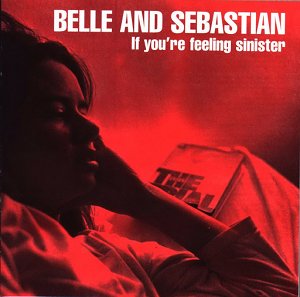
Often seen as the quintessential gay album of the nineties, I was gifted If You’re Feeling Sinister by old gay pal Gay Jamie who, himself, had obtained it during the Great Internet Download Free-For-All of the mid to late 1990s.
At the time, I saw Belle & Sebastian as a kind of hipster bollocks band. Loved by trendies and soul patch sporting arts students and with such prejudice, I wasn’t all that bothered by them. Of course, this was in my late, uninformed, uncultured, blinkered, pre-internet, pre-university, unenlightened, pre-millennial twenties where most of my world still revolved around Liverpool, a shit office job and regularly going to the pub with similarly minded folk and talking shite.
Of course, hipster pals were already hinting that I would like the band long before I’d actually listened to the album. Indeed, when I met him, Hipster Nick was already much of a keen fan and Telly Expert Tim, who would often talk about how he was into Belle & Sebastian before anyone else had even conceived of the idea of a band called Belle & Sebastian and that, besides which, they weren’t as good now, anyway, since Stuart had left the band, would sneer at anyone who clearly had only recently become a fan. The thing was, this time they were right; I did like the band.
Fortunately, Stuart was still in the band at the point of releasing If You’re Feeling Sinister and Tim was quite right, the band’s early albums are, in my opinion, the better ones. Much in the same way that Syd Barratt’s influenced Pink Floyd albums are distinctly different to those that come later and indeed, after, Roger Waters. Well crafted, the songs on the album have a unique sound with a lyrical poetic genius that is lacking from the majority of modern bands some of them define adolescent exploratory gay sentiment while others reflect on angst, paranoia or obsession.
Possibly one of the best films ever released in the last 40 odd years, in my opinion, is Brian De Palma’s extravagant semi-musical tour de force Phantom of the Paradise. What, you might ask, does this 1970’s “blockfluster” have to do with a Canadian duo of thirty-somethings? Well…quite frankly this….
The split screen sequence of de Palma’s film stuck with me for such a long time that it also influenced some of the films I made at university (check them out on my Vimeo page). I love how it’s choreographed and edited. I love how the use of two cameras to show two distinct stories adds interest and innovation as well as allowing the viewer to experience often unseen detail on each watch. Genius.
So when I saw Tegan & Sara’s video for their song I Hear Voices and how it has loads of subtle nods to Phantom of the Paradise, I fell in love with the song and simply had to get the album. Unfortunately, while I’m still very moved and enamoured with the track, the other songs on the album still don’t grab me, but I keep the album “just in case” and because I “should like them”.
If It Was You is the third album by the band, released in 2002. It does have sounds similar to other angry chicks with guitars from the same era, kind of like evolved from Belly or Throwing Muses with maybe a bit of Courtney Love chucked in.
The thing with Canterbury scene folk music is it is as incestuous as progressive rock in that band members swap around like couples swap partners at a swingers party. Indeed, along with the band members, so also comes a very distinctive sound that pervades the music like the sort of odour that lingers inside a musty old caravan. Moreover, Canterbury scene bands blur the prog rock/folk boundaries and it is often difficult to pigeonhole your selected band into the correct genre.
When you listen to the likes of Caravan, it’s not surprising that it seems so familiar. Indeed, two of the band’s members, Richard and David Sinclair, later joined Camel. But apart from that, one can detect influences both from and to the likes of Gong, Spirogyra, Trees, Renaissance and even Greenslade. I ended up with this and three other Caravan albums following a deeper investigation of bands featured onThe Best Prog Rock Album in the World…Ever compilation.
If I Could Do It All Over Again, I’d Do It All Over You is the band’s second album. Released in 1970 and features the original line up of the band – Pye Hastings, David & Richard Sinclair and Richard Coughlan. It also features a rather prog-a-licious heavily jazz-influenced 14 minute track For Richard.
Experimental weird shit from American weird shit music makers Life Towards Twilight.
I guess if you’re into weird shit or if you like listening to someone playing a toy piano while also playing old gramophone records then this will really float your boat. Moreso if you want help to summon dark entities like Slenderman or the Gibberman to join you in your drug-fuelled slaughter fest.
Me? I guess I’m now too old and sensible to appreciate the aural artistry incumbent in this release. Maybe in 2007 when I downloaded the album for free, I was in a better frame of mind, appreciation-wise. But with the wife leaving the room in disgust during the listen for this entry, that is surely a sign that it’s not everyone’s cup of tea.
Coffee table hipster music nineties style from everyone’s favourite baldy hipster nineties musician Moby. This is the album that everyone bought after he released Play in an effort to seem more culturally independent amongst their fellow Saturday Guardian supplement reading proto-hipsters by showing ownership of his previously released albums.
Comprising of a selection of Moby’s music written for film, I Like To Score does feature some good tunes including First Cool Hive from Scream, Ah-Ah from Cool World and his take on the James Bond theme as used in Tomorrow Never Dies.
As I’ve said before, even though I have a few Moby albums, I’m not a massive Moby fan. But it’s difficult to have been an adult in the nineties/noughties without having some Moby in your music collection. As I’ve also said, I’ve tried to like Moby, but I really do struggle.
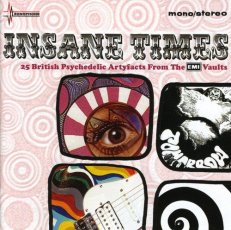 Insane Times: 25 Psychedelic Artyfacts from the EMI Vaults is a compilation album of really odd music. I’d say completely odd but the inclusion of Bonzo Dog, Yardbirds and Kevin Ayres kind of bring the oddness down a bit. It is though, very much the Psychadelic Rock version of the folk anthology Gather in the Mushrooms.
  Whenever I hear
  One-trick Pony John Shuttleworth’s latest album.
 As long term readers of this project might remember, during the divergence of Yes in the early nineties, when Chris Squire said “No” to Jon Anderson’s use of the band name
 Incantations is Oldfield’s fourth album following Ommadawn and precedes Exposed. Musically, this album features themes and motifs that are repeatedly used throughout the four sides accompanied by Oldfield’s stylistically familiar circle of fifths. Through his guitar wankery, his use of choral and a folksy solo by his singer du jour, Steeleye Span’s Maddy Prior (doing a really good impression of
 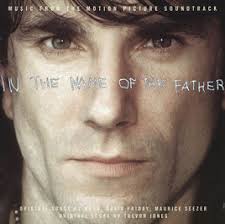 The soundtrack for the 1993 film In the Name of the Father about the Guildford pub bombings of 1974.
 I first learned about King Crimson following the amusing Bill Bailey fronted Channel 4 docu-countdown-show Top Ten Prog which was broadcast at the height of the prog revival of the late nineties/early noughties.
 Tess Don’t Tell was the first song I ever heard from this, Ivy’s fifth studio album. I forget where it was but suspect that it was on a random “Music you might like” playlist from the earlier days of Last.FM before it was bought by Spotify and ruined. Of course having a band name like Ivy meant having to use hardcore advanced Googlefu so that Ivy, the American band, came up in searches instead of what other monstrosities came up instead.
 We’ve seen

 Mrs Gnomepants V1.0 is the keeper of this album of which I have a digital rip. Weirdly, and possibly because of you know “internet downloading”, I appear to have a fusion of two versions of this album: the original 1998 CD rip and the 2003 Special Edition.
 When she’s not wailing away hauntingly with Brendan Perry and the rest of Dead Can Dance, Lisa Gerrard likes to loan her distinctive siren call to other atmospheric music makers like Irish composer Patrick Cassidy (Hannibal {2001} and Salem’s Lot {2004}).
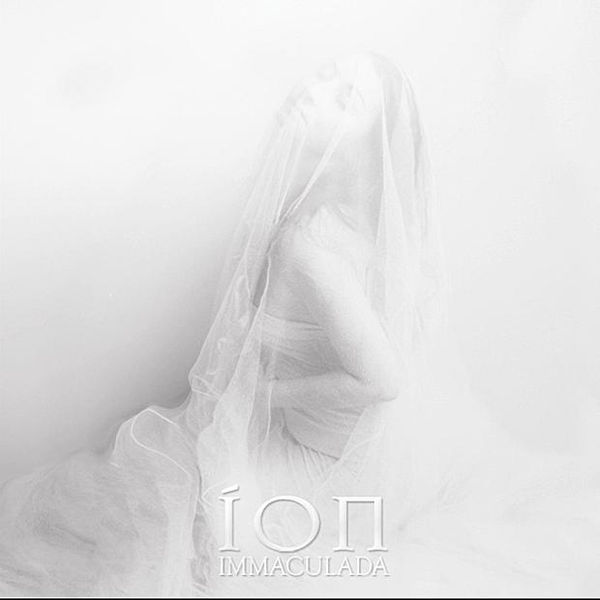 Not one of those CDs that you might find in an incense smelling floaty vagina new age shop in Avebury or Glastonbury but not far off.
 This is the Sugarplum Fairies’ fifth album following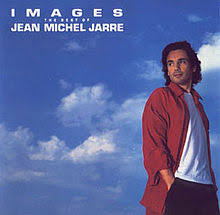
 This, it has to be said, is quite possibly the album that has been the most influential in my life. From as young as 11 years old, when introduced to the album by my brother who had won it in a competition, to my teen years where Shitbag Pulling and I would sit around his piano and try to deconstruct its intricacies and beyond into my late twenties, thirties and present day. Not a period of my life has gone by without something being connected or linked to this album.
 Since rediscovering this in my collection, I have listened to it nearly every day since. It’s curious how the modern way seems to be more playlist orientated than album driven. As an exercise, I listened to the first album, Renaissance, this album, Illusion, and the following three albums, Prologue, Ashes are Burning and Turn of the Cards, in effect the first 5 albums by the band, to see if I could pinpoint something groundbreaking. I couldn’t but it was fun. But this Renaissance exercise has shown me how important music appreciation skills are in the full enjoyment of music by artists and appreciation of how sound develops over time.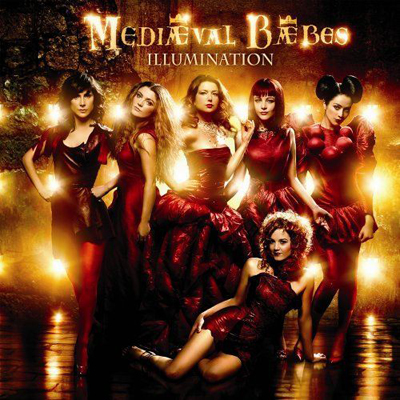
 Often seen as the quintessential gay album of the nineties, I was gifted If You’re Feeling Sinister by old gay pal Gay Jamie who, himself, had obtained it during the Great Internet Download Free-For-All of the mid to late 1990s.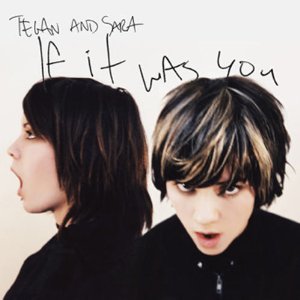
 The thing with Canterbury scene folk music is it is as incestuous as progressive rock in that band members swap around like couples swap partners at a swingers party. Indeed, along with the band members, so also comes a very distinctive sound that pervades the music like the sort of odour that lingers inside a musty old caravan. Moreover, Canterbury scene bands blur the prog rock/folk boundaries and it is often difficult to pigeonhole your selected band into the correct genre.
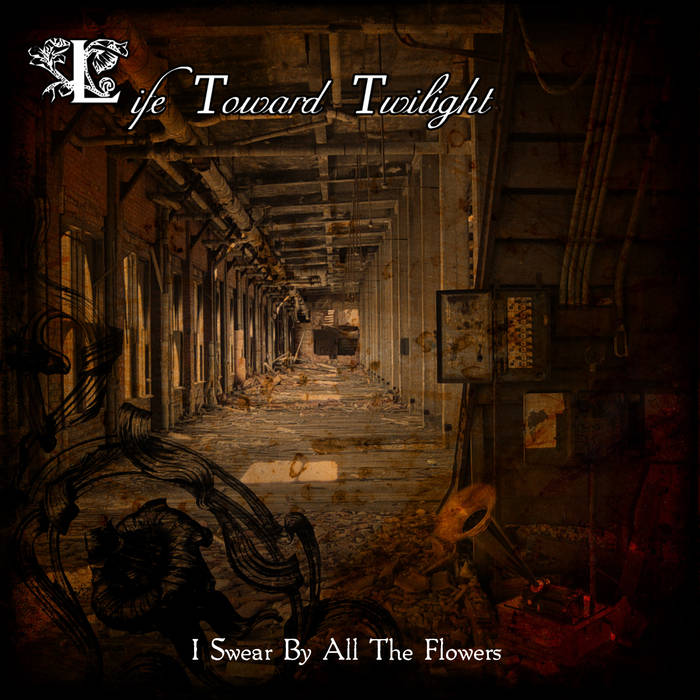 Experimental weird shit from American weird shit music makers Life Towards Twilight.


Emerger – Carptree [#635]
by stegzyApple Music was one of the causes of the last hiatus. Having taken advantage of the super 3 months free offer and slightly better than usual broadband at my rural home, I was given access to loads of new music. Moreover, I was thrilled to discover the “Suggested for you” feature of the For You tab and how it “Suggests” music you might like based on your listening. Then, one-day last year, Apple Music suggested I’d like Emerger by Carptree and that was it, I was sucked in like a leaf in a water pump reservoir.
Carptree do everything right that a progressive rock band formed of two Swedish blokes with a fondness for fishing and a theremin would do. Bog standard low budget music videos, lyrics about nature, crazy waxed moustaches, lots of keyboard twiddly and a vocalist that sounds like Peter Gabriel before he went all Brian Pern.
Emerger is new prog done well. Like someone has been handed the progressive rock recipe book and followed it to the letter. The whole album has a semi-concept feel (is it about fishing? Or is it about life on a river bed? I’m not entirely convinced) and the production values show how easy it is for middle-aged mates to be creative together in a “We’re getting old now but haven’t made it yet because of the day job” way with an Apple Mac and a bloke from work who plays the drums.
Share this:
2017 Carptree Progressive Metal Progressive Rock