Stegzy's Music Project

A commentary on Stegzy's album collection

Impossible Princess – Kylie Minogue [#616]

Kylie_Minogue_Impossible_PrincessMrs Gnomepants V1.0 is the keeper of this album of which I have a digital rip. Weirdly, and possibly because of you know “internet downloading”, I appear to have a fusion of two versions of this album: the original 1998 CD rip and the 2003 Special Edition.

Of the two versions, it’s the original I prefer, I’m not sure why producers think remixing things is something people want to hear. I mean imagine someone going into the Louvre and remixing the Mona Lisa the making the remix the only version people could see. There would be uproar!

Impossible Princess is a marked divergence from Minogue’s usual pop princess style and, I think at least, is her best work. She has said of the album that she would never do another like it and it is her least favourite. Also, sadly, exposure wise, it didn’t fair as well as other albums, especially in the UK, as its release coincided with the death of Princess Diana, so was renamed Kylie Minogue and release was delayed until the buzz had died down.

This and Air’s Moon Safari are two albums that define a period where there were a lot of changes in my life every time I hear songs from it, fond memories are invoked of people I’ve not seen in ages and events and activities partook.   It still, even nearly 20 years since its release and about ten years since I last listened to it, sounds amazing.
Comments Off on Impossible Princess – Kylie Minogue [#616]

Immortal Memory – Lisa Gerrard & Patrick Cassidy [#615]

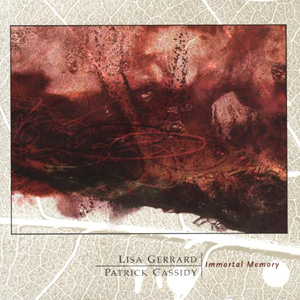
Immortal_memory_-_gerrard_cassidy_-_front.jpgWhen she’s not wailing away hauntingly with Brendan Perry and the rest of Dead Can Dance, Lisa Gerrard likes to loan her distinctive siren call to other atmospheric music makers like Irish composer Patrick Cassidy (Hannibal {2001} and Salem’s Lot {2004}).

This pretty much sounds no different to any other Lisa Gerrard work and will no doubt appear in cheaply produced tense, moody-broody television dramas and films set in rainy locations and involving despairing situations such as wearing raincoats in Washington DC or the protagonist not being able to tell people about something awful they’ve uncovered because “the man” won’t stand for it.

I think if I really want to feel depressed and out of luck, this is the album I’ll listen to.

Comments Off on Immortal Memory – Lisa Gerrard & Patrick Cassidy [#615]

Immaculata – Ion [#614]

ImmaculadaNot one of those CDs that you might find in an incense smelling floaty vagina new age shop in Avebury or Glastonbury but not far off.
Immaculata is the second album of Duncan Patterson’s music project Ion and, if the official Ion website press blurb is to be believed, a result of visiting Greece and Ireland to study musical style. And why wouldn’t you believe that? You can clearly hear the Greecian influences, the Irish influences and also maybe a teeny bit of influence from Lisa Gerrard or Blackmore’s Night.

There are some good sounds on this album and I’m not entirely certain how it ended up in my collection, but I suspect I’ve probably got it from either a royalty-free site like Jamendo while looking for something to use in a video I was making or it was one of the last things I downloaded from Usenet.

Comments Off on Immaculata – Ion [#614]

The Images We Get – Sugarplum Fairies [#613]

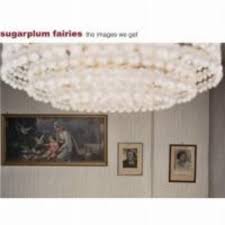
Unknown-2.jpegThis is the Sugarplum Fairies’ fifth album following Chinese Leftovers and preceding Godspeed & Silver Linings and was the first crowdsourced/funded album I ever contributed to. It features the usual corduroy wearing English Literature teacher allusions and lyrical references as well as the haunting tones of Sylvia Ryder’s vocals.

Every time I listen to SPF I imagine the life of a female English Literature student besotted with and embroiled in a steamy Truffautesque relationship with their older corduroy jacket with leather patches wearing teacher. Lying post-coitally semi-naked on a bed in a smoke-filled wooden panelled windowed room. Copies of classic literature strewn hither and thither. Perhaps, as the album title suggests, that’s the imagery the band want us to get…


Comments Off on The Images We Get – Sugarplum Fairies [#613]

Images – Jean Michelle Jarre [#612]

Images - Jean Michel Jarre

Not available in the UK

Having now swapped to the more hard drive friendly Apple Music, when writing entries for the music project, I often try to do research by listening via my iPhone through my car stereo while driving to and from work. This usually works well for the more mainstream bands in the collection but sometimes I’ll have difficulty locating the album on Apple Music because of “Licencing Laws” which I feel is a bit of a bugger because I have the CD!

Images is a “best of” compilation of Jarre’s work. It is the last CD I ever bought from the Virgin Megastore in Liverpool (now the awesome Clas Ohlson) during a 5 for £20 mega sale. Isn’t it a shame that streaming media providers like Apple Music and Amazon don’t do the good old “5 for £20” deals? Instead, they sting you for music you already own. Meh.

Jarre is one of those artists whose music screams 1970s hauntology. In fact, I’d probably hazard a guess at him being an influence on the likes of Belbury Poly, Focus Group and other Ghost Box stalwarts. To me, if it isn’t the expectation of hearing the hum from my father’s stereo’s badly earthed amplifier or the memory of the cassette tape with the picture of the weird skull/bleeding Earth picture on the front, the 1970s is this type of music. The tracks on this album are pretty similar to those on Essential and Aero, indeed, this is just simply a record label’s attempt to cash in on some hapless music nut wanting a bargain in a 5 for £20 deal.

2 Comments »

Illusions on a Double Dimple – Triumvirat [#611]

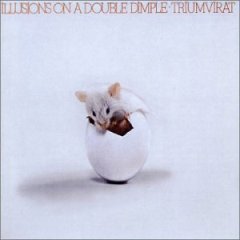
Illusions_on_a_double_dimpleThis, it has to be said, is quite possibly the album that has been the most influential in my life. From as young as 11 years old, when introduced to the album by my brother who had won it in a competition, to my teen years where Shitbag Pulling and I would sit around his piano and try to deconstruct its intricacies and beyond into my late twenties, thirties and present day. Not a period of my life has gone by without something being connected or linked to this album.
Back in the pre-internet days, one’s only source of music would be friends, relatives and flicking through the alphabetical racks in Virgin Megastore, Our Price or HMV. Every single time I went to those shops I would flick through the racks, Triumph…Trivium…no Triumvirat. Every dictionary of popular music I would thumb through to T looking for anything, even a chuffing footnote about Triumvirat. No. Nothing. By my early twenties, when I was dabbling in Goth, I’d begun to think that maybe the band was just a fantasy. But as the floodgates of internet knowledge started to creak open, information about the band reached me and I began to realise that they were so much much more than this album.

The album is a concept in two parts. The first, an allegorical telling of a tale of social and financial hardship brought on by being “Born on the wrong side of town”. The narrator, fired from their job, accused of some dubious theft, heads to the local bar and seeks out a large glass of Dimple. Dimple, which I didn’t know until I was in my late teens, is a brand of Scotch whisky.  Upon imbibing the drink, and having sold his coat and every possession, our narrator heads out into the streets of Dusseldorf, passes out then plays the piano a bit.

The second half, possibly connected to the first, I’m not quite sure, tells of a band who revolt against their manager, Mr Ten Percent, a frightfully extravagant gentleman with a big Mercedes, a house on a hill and frequent week-long trips to Sweden, and become awesome and meet girls.

Well, that’s my interpretation.

The album was the band’s breakthrough release and saw their popularity rise in America and Europe. Of course, in the UK we’re culturally insular and don’t like anything not homegrown or that we’re not told to like by commerce. As a result, this is probably why Triumvirat, a giant on the world prog rock stage, were never available in major high street record shops in the UK. Well more fool you, Mr HMV. Look what your selfish enforcement of culturally appropriate music did to your profits following the Great Internet Download Free for All of the Early Noughties.  Even Apple Music has Triumvirat!


Comments Off on Illusions on a Double Dimple – Triumvirat [#611]

Illusion – Renaissance [#610]

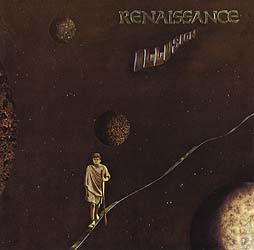
Ren_ill2Since rediscovering this in my collection, I have listened to it nearly every day since. It’s curious how the modern way seems to be more playlist orientated than album driven. As an exercise, I listened to the first album, Renaissance, this album, Illusion, and the following three albums, Prologue, Ashes are Burning and Turn of the Cards, in effect the first 5 albums by the band, to see if I could pinpoint something groundbreaking. I couldn’t but it was fun. But this Renaissance exercise has shown me how important music appreciation skills are in the full enjoyment of music by artists and appreciation of how sound develops over time.

As per Illusion by Illusion, I had mostly ignored this album, frightened by what stylistic differences that might exist to affect my enjoyment of core 1973-1978 era Renaissance. However, in true form, I found pre-Haslam Renaissance much more enjoyable. Indeed, it was clear that the style only seemed to change once the Dunford/Haslam crew stopped recycling work by the original band members and focused on their own style.

Illusion is the second album by the first incarnation of Renaissance that would later become Illusion and Stairway. It features the first song to include a member of the second incarnation, Michael Dunford, Mr Pine, which also features a melody that would later resurface in the fifth, and third with the new lineup, album Turn of the Cards. 

To add further twists the album was released in Germany in 1971, then again to the wider world in 1973 but not in the UK until 1977.

Finally, as a footnote, the video that accompanies today’s entry features Binky Cullom in the female vocal lead. Binky was a transitional member between Relf and Haslam. Sadly Binky doesn’t really seem to have the steadiness of Relf or Haslam, but I thought it would be fun to include it here.

Confused? Think about how the band felt!

https://www.youtube.com/watch?v=cvDXhEZvKyA

and for those whose ears are now bleeding, here is the salve.

Comments Off on Illusion – Renaissance [#610]

Illusion – Illusion [#609]

Illusion_-_Same.jpgDuring the run-up to the next Music Project entry, I had to do a bit of research. Renaissance is one of those true prog bands whose line up has changed so much over the years, they’re unrecognisable to their original form. 
When Renaissance formed in 1969 it originally comprised of former Yardbirds Jim McCarty and Keith & Jane Relf together with John Hawken and Colosseum Bassist Louis Cennamo but when I first heard the band they were a quintet of none of the original members. The original line up released two albums then kind of went their separate ways in the early seventies. They then had a change of heart and reformed as a different band, Illusion. 

Of course I only kind of slightly knew this and to be honest, I was a little scared to listen to any Renaissance before Annie Haslam.  So when the next Music Project entry was Illusion by the McCarty/Relf lineup naturally I was a bit apprehensive. Then I dug about on Wikipedia and relearned the Renaissance story and how the McCarty/Relf Renaissance split and reformed as Illusion, confusingly later releasing the album Illusion. Curiosity got the better of me and I ended up Apple Musicing the album into my collection. 

So today, we’re looking at Illusion by Illusion. Jane Relf, together with Jim McCarty, John Hawken and Louis Cennamo (basically Renaissance pre-Dunford/Haslam) released this, their second Illusion album in 1978, Keith Relf having died tragically in 1976, is missing from this lineup.  It’s when you hear stuff like this, you begin to see the roots of Renaissance, the influence of other prog bands and how things could have been so-so different. 

Relf has a distinctive a voice as Haslam and there are clear embryonic audible melodic themes that would later resurface in Dunford/Haslam era Renaissance songs, likewise, one can hear the converse. Stylistically, they are subtly different yet the same; piano heavy, with an essence of floaty folk music vocals, airy poetic lyrics and a lick of Floydesque synth motifs here and there. I think my favourite track has got to be Madonna Blue which screams seventies folk rock so much it may as well grow long straight hair and wear a kaftan. Indeed, when listened to in its entirety, one might as well try listening back to back with Renaissance’s Illusion and see if you can tell the difference.

Just like I did.

Comments Off on Illusion – Illusion [#609]

Illumination – Mediaeval Baebes #608

cd_illumination.jpg

While looking for something akin to Lisa Gerrard or maybe something a little darker than Blackmore’s Night, I stumbled headfirst into the voluptuous bosoms of the Mediaeval Baebes who, at the time of blunder, were scheduled to appear at the annual Mediaeval Fayre in Tewkesbury.  Eager to see them I tried, in vain, to convince Mrs Gnomepants v1.0 into going. Sadly her desire to walk around a field filled with reenactors and “beardy weirdies” (her words) all day did not appeal.

We didn’t go.

It rained.

Not only on my parade but also on the actual fayre so any disappointment I had was swiftly washed away.

Illumination is the sixth album from the band formed from remnants of Miranda Sex Garden who perform classical music in acapella style.  If, like me, you were hoping for dark, Dead-Can-Dance-esque gutter goth, you, like initially me, will be sadly disappointed. But if you’re looking for a kind of Latin singing version of the Spice Girls crossed with Lisa Gerrard, you’ll be pleasantly surprised. It’s hard to pigeonhole Mediaeval Baebes though, they’re certainly not goth and I wouldn’t call them pop either more neo-easy-listening.


SaveSave

Comments Off on Illumination – Mediaeval Baebes #608

Ignis Mutat Res – Lux Interna #607

Unknown-2.jpeg

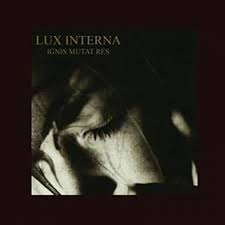
Ignis Mutat Res by Lux Interna

Since we last met Lux Interna on the music project with God is Not Dead for the Birds I have had more time on my hands to listen to their other works. During that time I’ve discovered that to enjoy today’s album you will need the following:


  • A basic understanding of Latin
  • A bushy hipster beard
  • Rolled up tight leg trousers
  • Braces
  • An ironic beret or bald pate or both
  • A bicycle

During the rise and wane of European neofolk groups would form, usually with a gruff-sounding male vocalist, and, mimicking Dead Can Dance et al, write songs with Latin lyrics or names.

To sound mysterious.

Without realising that Lux Interna was one such band, I had heard, and enjoyed, their track Horizon on the much fabled Looking For Europe Neofolk Compendium. And so, as with most bands that I hear and like the sound of on Various Artist compilations, I tried finding other albums by the band. In doing so I obtained this, their second album, Ignis Mutat Res (aka Fire Changes Matter).

It’s difficult to describe Lux Interna without alluding to other obscure neofolk bands. They certainly have a flavour of Love is Colder than Death and maybe a hint of Ordo Equituum Solis with notes of Changes chucked in for good measure and all wrapped up in a nice Projekt record label cling film. In fact, let’s throw in a bit of influence from Blood Axis or Of the Wand and Moon for good measure.But then I suppose that’s the whole neofolk genre in a nutshell.

Sadly the album itself suffers from a beardy bloke in black with a guitar trying to look and sound mysterious. Horizon is probably the most enjoyable track on the album, the others are a little too….comical…to be taken seriously.

Comments Off on Ignis Mutat Res – Lux Interna #607

If You’re Feeling Sinister – Belle & Sebastian #606

Belle_And_Sebastian_-_If_You're_Feeling_Sinister.jpgOften seen as the quintessential gay album of the nineties, I was gifted If You’re Feeling Sinister by old gay pal Gay Jamie who, himself, had obtained it during the Great Internet Download Free-For-All of the mid to late 1990s.

At the time, I saw Belle & Sebastian as a kind of hipster bollocks band. Loved by trendies and soul patch sporting arts students and with such prejudice, I  wasn’t all that bothered by them. Of course, this was in my late, uninformed, uncultured, blinkered, pre-internet, pre-university, unenlightened, pre-millennial twenties where most of my world still revolved around Liverpool, a shit office job and regularly going to the pub with similarly minded folk and talking shite.

Of course, hipster pals were already hinting that I would like the band long before I’d actually listened to the album. Indeed, when I met him, Hipster Nick was already much of a keen fan and Telly Expert Tim, who would often talk about how he was into Belle & Sebastian before anyone else had even conceived of the idea of a band called Belle & Sebastian and that, besides which, they weren’t as good now, anyway, since Stuart had left the band, would sneer at anyone who clearly had only recently become a fan. The thing was, this time they were right; I did like the band.

Fortunately, Stuart was still in the band at the point of releasing If You’re Feeling Sinister and Tim was quite right, the band’s early albums are, in my opinion, the better ones. Much in the same way that Syd Barratt’s influenced Pink Floyd albums are distinctly different to those that come later and indeed, after, Roger Waters. Well crafted, the songs on the album have a unique sound with a lyrical poetic genius that is lacking from the majority of modern bands some of them define adolescent exploratory gay sentiment while others reflect on angst, paranoia or obsession.

A genius of an album!

SaveSaveSaveSave

Comments Off on If You’re Feeling Sinister – Belle & Sebastian #606

If It Was You – Tegan & Sara #605


Tegan_and_Sara_-_If_It_Was_You_cover.jpg

If It Was You – Tegan & Sara


Possibly one of the best films ever released in the last 40 odd years, in my opinion, is Brian De Palma’s extravagant semi-musical tour de force Phantom of the Paradise. What, you might ask, does this 1970’s “blockfluster” have to do with a Canadian duo of thirty-somethings? Well…quite frankly this….

The split screen sequence of de Palma’s film stuck with me for such a long time that it also influenced some of the films I made at university (check them out on my Vimeo page). I love how it’s choreographed and edited. I love how the use of two cameras to show two distinct stories adds interest and innovation as well as allowing the viewer to experience often unseen detail on each watch. Genius.

So when I saw Tegan & Sara’s video for their song I Hear Voices and how it has loads of subtle nods to Phantom of the Paradise, I fell in love with the song and simply had to get the album. Unfortunately, while I’m still very moved and enamoured with the track, the other songs on the album still don’t grab me, but I keep the album “just in case” and because I “should like them”.

If It Was You is the third album by the band, released in 2002. It does have sounds similar to other angry chicks with guitars from the same era, kind of like evolved from Belly or Throwing Muses with maybe a bit of Courtney Love chucked in.

Comments Off on If It Was You – Tegan & Sara #605

If I Could Do It All Over Again, I’d Do It All Over You – Caravan #604

Car-IfIThe thing with Canterbury scene folk music is it is as incestuous as progressive rock in that band members swap around like couples swap partners at a swingers party. Indeed, along with the band members, so also comes a very distinctive sound that pervades the music like the sort of odour that lingers inside a musty old caravan. Moreover, Canterbury scene bands blur the prog rock/folk boundaries and it is often difficult to pigeonhole your selected band into the correct genre.

When you listen to the likes of Caravan, it’s not surprising that it seems so familiar. Indeed, two of the band’s members, Richard and David Sinclair, later joined Camel. But apart from that, one can detect influences both from and to the likes of Gong, Spirogyra, Trees, Renaissance and even Greenslade. I ended up with this and three other Caravan albums following a deeper investigation of bands featured on The Best Prog Rock Album in the World…Ever compilation.

If I Could Do It All Over Again, I’d Do It All Over You is the band’s second album. Released in 1970 and features the original line up of the band – Pye Hastings, David & Richard Sinclair and Richard Coughlan. It also features a rather prog-a-licious heavily jazz-influenced 14 minute track For Richard. 


Comments Off on If I Could Do It All Over Again, I’d Do It All Over You – Caravan #604

I Swear by All the Flowers – Life Towards Twilight #603

a1910193660_16.jpg Experimental weird shit from American weird shit music makers Life Towards Twilight.

I guess if you’re into weird shit or if you like listening to someone playing a toy piano while also playing old gramophone records then this will really float your boat. Moreso if you want help to summon dark entities like Slenderman or the Gibberman to join you in your drug-fuelled slaughter fest.

Me? I guess I’m now too old and sensible to appreciate the aural artistry incumbent in this release. Maybe in 2007 when I downloaded the album for free, I was in a better frame of mind, appreciation-wise. But with the wife leaving the room in disgust during the listen for this entry, that is surely a sign that it’s not everyone’s cup of tea.

Comments Off on I Swear by All the Flowers – Life Towards Twilight #603

I Like to Score – Moby #602

Moby_I_Like_to_Score

I Like to Score – Moby

Coffee table hipster music nineties style from everyone’s favourite baldy hipster nineties musician Moby. This is the album that everyone bought after he released Play in an effort to seem more culturally independent amongst their fellow Saturday Guardian supplement reading proto-hipsters by showing ownership of his previously released albums.


Comprising of a selection of Moby’s music written for film, I Like To Score does feature some good tunes including First Cool Hive from Scream, Ah-Ah from Cool World and his take on the James Bond theme as used in Tomorrow Never Dies. 

As I’ve said before, even though I have a few Moby albums, I’m not a massive Moby fan. But it’s difficult to have been an adult in the nineties/noughties without having some Moby in your music collection. As I’ve also said, I’ve tried to like Moby, but I really do struggle.

SaveSave

Comments Off on I Like to Score – Moby #602

I Can See Your House From Here – Camel #601

I Can See Your House From Here – Camel

Obviously influenced by the successes of Supertramp, in this album prog-meisters Camel make a departure from their sound of Mirage and Snow Goose and head down a more poppy Collins era Genesis path effectively becoming a sound akin to some sort of Rush-Supertramp-Toto hybrid.

This is Camel’s seventh studio album following Breathless and, in typical prog fashion, features a lineup change with original keyboardist Pete Bardens and bassist Richard Sinclair both having left the band. Moreover, Genesis’ Phil Collins guest performs on the album as a percussionist, which is probably why it sounds a little Genesissy than previous releases.  Indeed, the keen ear can certainly pick out the foundations of Stationary Traveller era Camel when the band went full on pop.

Not a big listener to this album to be fair but even during the listen for writing this entry I’m sofa dancing like a fan.

Comments Off on I Can See Your House From Here – Camel #601

Hurdy Gurdy Man – Donovan [#600]

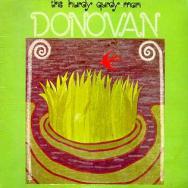
Donovan-The_Hurdy_Gurdy_Man

The Hurdy Gurdy Man by Donovan

So you’re a film producer and you are wanting to set the scene of your hippy fest movie set at the height of the 1960’s hippy movement. Or maybe you’re just a young person experimenting with retro drugs. Or perhaps you’re just old looking, with mad long Gandalf hair and matching beard dressing in army fatigues. Chances are you’re using the title song of this album to project some kind of ennui.

While Jim Morrison was riding on his storm and Hendrix was wanking his guitar. Manson and his family murdering people and John Paul George and Ringo were discovering drugs, Scottish folk artist Donovan was writing far-out folk tunes like some sort of Scottish Bob Dylan.

Legend has it that Donovan wrote the eponymous title track for his pal Mac Macleod and his band Hurdy Gurdy. However other sources, mostly Wikipedia and Donovan himself, say the song was written whilst visiting mystics in the Indian subcontinent with John Lennon, George Harrison, Mia Farrow and possibly every other Tom Dick and Harry from the music and art scenes at the time. Moreover, Donovan has performed the song with a verse he claims Harrison wrote for him so I guess there’s some truth in that.

When I obtained the album I was exploring music from the sixties looking for artists and albums I had possibly overlooked. I was already familiar with the title song so was interested in hearing other works by Donovan to see if there was any “connection”.  Sadly there wasn’t but I’ve kept it in my library purely for the “just in case” option.

Comments Off on Hurdy Gurdy Man – Donovan [#600]

Hurdy Gurdy – Hurdy Gurdy #599


R-1977968-1373153933-1294

Hurdy Gurdy by Hurdy Gurdy

Legend has it, Danish prog band Hurdy Gurdy wrote to Donovan in the late 1960s asking him to help the band break into the music scene. Impressed by the demos he received, Donovan went home and wrote a song for the band but when he heard them perform it, he rewrote a more acoustic version and kept it for himself.


That song became Hurdy Gurdy Man.  

Of course whilst Donovan made it big on the world stage, Hurdy Gurdy would have disappeared into obscurity if only for the Great Free-for-All-Download of the mid to late noughties. You know, that big downloady thing people did back then that killed popular music? I often think about my actions during that time and how I wrongly downloaded music from online file sharing locations depriving many artists of their hard earned funds. Hardworking artists and music that I would never have heard of had it not been for the whole downloady thing because, face it, who has time (and money) to spend all day looking through the racks of market approved music in HMV?

Hurdy Gurdy is Hurdy Gurdy’s first and, as far as my limited research has taught me, only album. I came across it while looking for hurdy-gurdy music, which, if you know me well enough you will know, is my favourite musical instrument. Sadly there are no actual hurdy-gurdys on the album. However,  it is saved by being very much a prog sounding album, with lots of guitar twiddling and quite a bluesy feel to the whole. The non-melodic singing is a little shouty for me and reminiscent of some post In the Court Of the Crimson King King Crimson or early Triumvirat. I think the only reason I’ve kept hold of it is that it’s quite a rare album and I’m always a stickler for rarities.  Fortunately, good old Youtube has the whole album for you to hear yourself.

Comments Off on Hurdy Gurdy – Hurdy Gurdy #599

Human’s Lib – Howard Jones #598

HowardJonesHumansLib

Human’s Lib by Howard Jones

Nothing says 80’s music more than a bloke with spiky hair and a synthesiser.


Oh, Howard Jones. I remember you with your spiky hair on singing What is Love? on Top of the Pops. I remember you on Live Aid singing Hide and Seek. I remember trying to work out the inaudibly sung lyrics in pre-internet days. I remember seeing you on a “We wuz in the Eighties” vox pop TV show in the early noughties. I remember thinking “What ever happened to Howard Jones?”.

This is Jones’ first album featuring three of his hit songs from his early 80s career. Rich in 80s synth melody with interesting if a little bitter lyrics the album has fared well in time but doesn’t carry as much of the welly as other albums from contemporary bands and artists. It’s more of a choice of listen than something you would  build an iTunes playlist from.

Comments Off on Human’s Lib – Howard Jones #598

Human Equation – Ayreon #597

Ayreon_-_Human_Equation

Human Equation by Ayreon

Human Equation is a double concept album from legendary Nineties/Noughties Dutch prog experiment Ayreon.

A man in a coma for twenty days struggles with inner demons and outside influences through internal song, each day being a track on the album. A supposed break from Ayreon’s  album spanning “Forever” story arch, although in the last track we do hear albeit briefly, from Forever of the Stars from the album Final Experiment and the Dream Sequencer from Universal Migrator which ties it all in nicely.

Human Equation is not my most favourite of Ayreon discoveries instead I’m all for the drama of Into the Electric Castle but as 01011001 hadn’t been released at the time I obtained my copy of Human Equation, it was a lid on the metaphorical pie of Ayreons work for me.

Like other Ayreon albums, guest singers each take a voice of a character within the overarching story with the likes of Dream Theatre’s James LaBrie and Soul Machine’s Eric Clayton joining the cast. Even prog keyboard wizard Rick Wakeman‘s son Oliver guests as synth player on track 7.  A feast of noughties prog.

Comments Off on Human Equation – Ayreon #597

How We Quit the Forest – Rasputina #596

How_We_Quit_the_ForestIn the early noughties, while the rest of the internet and Guardian supplement cultured Gen-Xers were going wild for the likes of Amanda Palmer, the Dresden Dolls and the Decemberists, I was trying to be a proto-hipster by bigging up the likes of Rasputina.

Sadly, Melora and co didn’t quite make the mainstream as Palmer did but hey, that’s not the point, the point being to make memorable expressive opine music that lasts regardless of when in time it is heard.

This album contains the first track I’d ever heard by Rasputina, Olde Headboard, and is a prime example of why album sales in the post-internet age depreciated with audience consumption methods.

Comments Off on How We Quit the Forest – Rasputina #596

How to Measure a Planet? – The Gathering #595


The_Gathering_-_How_To_Measure_a_Planet

How to Measure a Planet? – The Gathering

Back in the mid-noughties I was directed towards The Gathering’s Mandylion album and swiftly became enamoured with the Dutch Prog-metal band. Yet, while Mandylion and Home scratched an itch, How to Measure a Planet? made sure that further irritants were applied to the metaphoric discomfort.

At the time I was a mature student studying Media at Huddersfield University which often required late nights of reading European Media Directives,  Media Theory and writing essays on audience paradigms. Sometimes, to get me into the study zone, I would listen to albums while wearing my headphones, often on repeat. How to Measure a Planet became one of those albums. Constantly on loop,  songs from the album such as Liberty Bell and Probably Built in the Fifties would often blur into each other in some sort of semi-hypnotic chant. Moreover, I would sometimes fall asleep, book flopping to my side, waking sporadically through the night hours to what seemed like an extended mix of the song I’d already woken and fallen asleep to. As a result, this album has a kind of important place in my life soundtrack.

How to Measure a Planet is the band’s fifth studio album.


Comments Off on How to Measure a Planet? – The Gathering #595

House of Yes: Live at the House of Blues – Yes [#594]

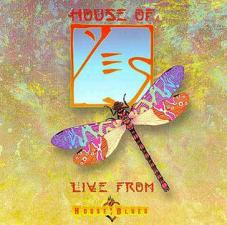
House_of_YesWhen this album was released back in 2000, the internet as we know it today was still in its fledgeling state. Websites were mostly created and owned by actual people rather than by corporations and users actually had to seek out their news rather than have it shown to them if an algorithm deigned to do so. As a result, I was only aware it had been released because I saw it while I was browsing the CD racks in HMV.

Of course, with it being a Live/Best of compilation and I already had most of the songs Live or in compilations, I was reluctant to part with hard earned cash for stuff I already had and instead bought something a little more desirable like Air’s Moon Safari or whatever else was about in those days. However sometime later, probably during the Great Internet Download Free-for-All of the early noughties, I was given a copy of the album by a work colleague and so it joined my collection.

House of Yes is a live double album featuring music from Yes’ earlier career and their album The Ladder. It also features Billy Sherwood on guitar and Igor Khoroshev on keyboards, Sherwood left shortly before the album’s release and Khoroshev had already been booted out of the band by that time due to a sexual harassment controversy.

I can’t say that I don’t like this compilation. There are some good performances on the album the enjoyment of which can be enhanced by the viewing of the DVD of the gig.

Comments Off on House of Yes: Live at the House of Blues – Yes [#594]

House of Love – House of Love [#593]

The_House_of_Love_(1988).jpgLike most teenagers, I was fortunate enough to be Bez to my old school friend, Mike’s band Jean Pierre O Malley & the Gieger-Muller Tubes. I attended most practice sessions (mostly on the promise of a few pints of beer afterwards) and I accepted that they would do cover versions of songs I didn’t really know.

We did a set of two songs, the Stones’ Paint it Black and the more obscure Christine by the House of Love. We had a slight standing ovation (three people, mostly groupies) and a huge round of applause from all those present. The band then split un-acrimoniously but the strains of Christine resonated around my head for several years after.

Then, one evening, during the Great Internet Download Free-for-All of the mid-noughties I saw that the album House of Love was available for me to download. I immediately put Christine on and relived that night of proto-fame at the Bishop Eton Parish Centre Youth Talent Show 1992.

I have to say though, we were better.

Comments Off on House of Love – House of Love [#593]

Hotel Paper – Michelle Branch [#592]

Hotel_Paper.jpgTrying to cash in on the popularity of grumpy skater chick Avril Lavigne, music execs yoink another young lady with attitude into the limelight. That lady was Michelle Branch.

I remember how the American music execs positioned itself to launch Branch to the European side of the pond.  This previously unheard of artist started to appear on late-night European chat shows and a couple of her songs popped up here and there as incidental music on TV shows. Even the Guardian newspaper’s Saturday supplement suggested that no middle-class proto-hipster’s coffee table would be complete without a carefully placed copy of the album to wow their less cultured dinner party guests.

I bought it. I liked it. I listened to it in conjunction with the more feisty Lavigne. I watched as almost like a light switch being turned off, Branch seemed to dissolve into the general white noise of music, overshadowed by Lavigne and later, more successful artists.

Comments Off on Hotel Paper – Michelle Branch [#592]